Exploring 3D Solid Shapes: Names, Properties, and Everyday Examples
When you pick up a coffee mug or glance at a building’s skyline, you’re encountering 3D solid shapes—geometric figures that occupy volume in space. Knowing the names of these shapes, their defining characteristics, and how they appear in the world around us can sharpen both your visual literacy and your problem‑solving toolkit. This guide walks you through the most common 3D solids, gives clear examples, and shows why they matter in everything from architecture to gaming.
Why 3D Shapes Matter in the Real World
Everyday objects are built from combinations of simple solids. Architects choose shapes to optimize load distribution; engineers use them to design safe, lightweight parts; artists rely on them to create depth and form. Understanding 3D solid shapes helps you reason about space, predict structural behavior, and even solve puzzles.
Common 3D Solid Shapes and Their Names
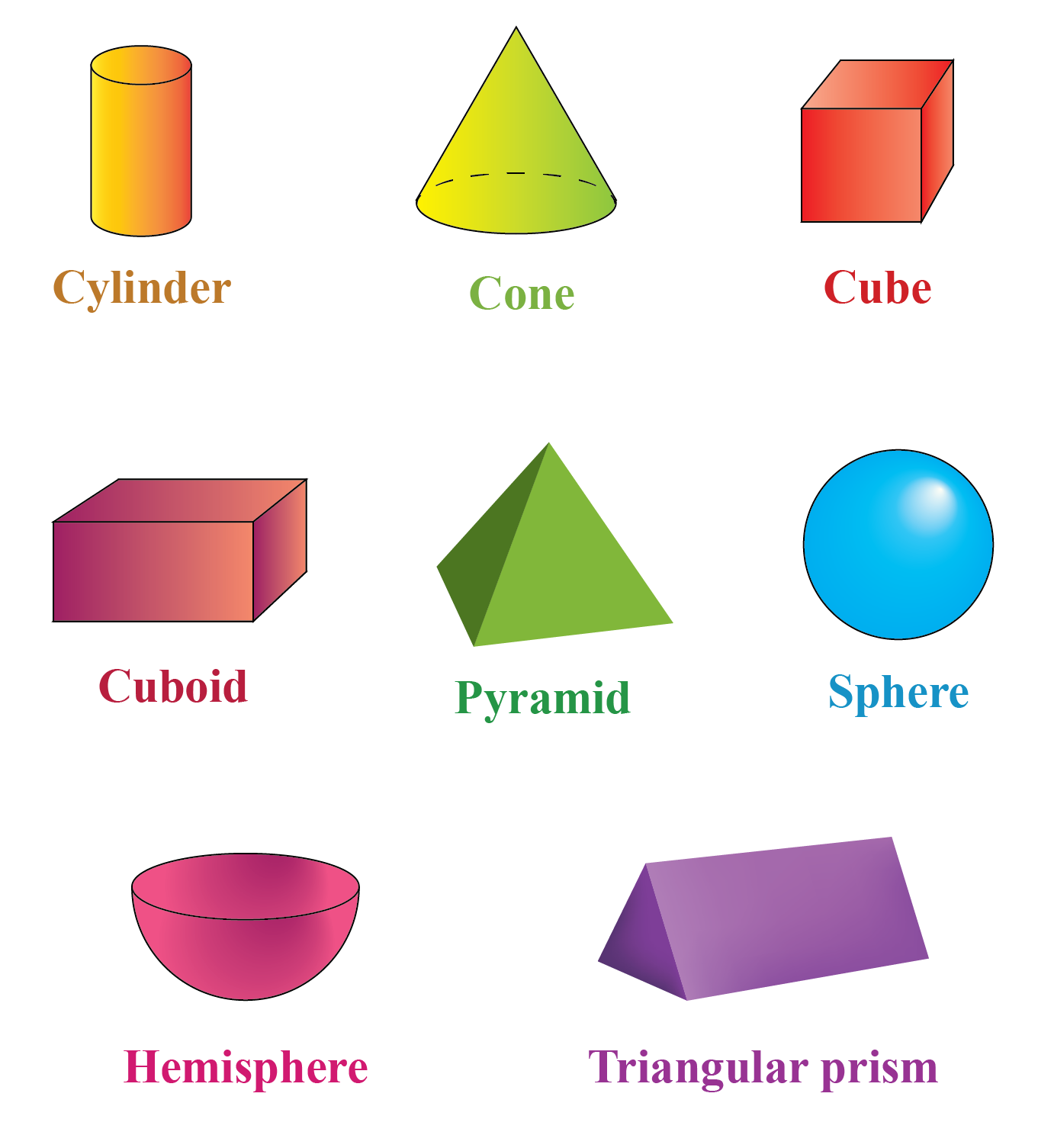
Below is a quick rundown of the most frequently encountered solids. Each entry lists the shape’s name, its main features, and a relatable example.
- Cube – six equal square faces, all angles 90°. Example: a standard dice, a Lego block.
- Cuboid (Rectangular Prism) – like a cube but faces can differ in size. Example: a shoebox, a bookcase.
- Pyramid – a polygonal base joined to a point (apex). Example: the Egyptian pyramids, a paper napkin fold.
- Prism – two parallel, congruent bases linked by rectangular faces. Example: a soda can (circular prism), a shipping container (rectangular prism).
- Sphere – all points equidistant from a center. Example: a basketball, a planet.
- Cylinder – two parallel circular bases connected by a curved side. Example: a can of soup, a pillar.
- Cone – a circular base tapering to a point. Example: an ice cream cone, a traffic cone.
- Octahedron – eight equilateral triangular faces. Example: the shape of a snowflake in 3D models, a classic 3D puzzle piece.
- Dodecahedron – twelve pentagonal faces. Example: a soccer ball (if you imagine the geometric core).
These shapes can be combined, intersected, or sliced to create more complex objects. For instance, a truncated pyramid (cutting off the top of a pyramid) is used in certain architectural motifs.
Identifying Shapes in Everyday Life
Developing a habit of noticing shape names boosts spatial awareness. Try this exercise: pick any object in your home, determine its primary solid type, and then look for secondary solids nested within it.
- The Coffee Mug – The main body is a cylinder. The handle is a torus (donut shape) or a simplified circular cylinder with a curve. The brim can be considered a thin cylindrical shell.
- The Window – Often a rectangular cuboid frame with a flat pane. The pane itself is a very thin plate (prism with negligible depth).
- The Book – A classic rectangular prism with rounded edges. The spine sometimes exhibits a subtle cylindrical curvature.
Applications Across Disciplines
Shape knowledge isn’t limited to geometry class; it’s a practical skill.
- Engineering – Knowing how a cylinder behaves under pressure informs the design of pipes and pressure vessels.
- Computer Graphics – 3D models are built from vertices and faces that align with shapes like tetrahedrons and octahedrons to create efficient meshes.
- Architecture – Architects exploit the strength of triangular prisms (trusses) to spread loads, while cylindrical columns offer both aesthetic appeal and structural stability.
- Education – Using tangible shapes like cubes and spheres helps teach concepts such as volume, surface area, and symmetry.
Quick Reference: Shape Properties
Below is a concise table that pairs each shape with its key attributes. Use it as a cheat sheet when you need to identify or classify a solid.
- Cube – 6 faces, 12 edges, 8 vertices. Volume = a³.
- Cylinder – 2 circular bases, 1 curved surface. Volume = πr²h.
- Pyramid – n-gonal base, 1 apex. Volume = (1/3) × base area × height.
- Sphere – 0 faces, 0 edges, infinite points. Volume = (4/3)πr³.
- Cone – 1 circular base, 1 apex. Volume = (1/3)πr²h.
FAQ
What is the difference between a cube and a cuboid?
A cube has all faces of equal size and all angles 90°, while a cuboid (rectangular prism) may have faces of differing lengths but still retains right angles.
How can I determine if an object is a prism or a pyramid?
Look at its base shape and whether the sides converge to a single point (pyramid) or remain parallel (prism). For example, a box is a prism; a pyramid shape with a square base is a pyramid.
Can real-world objects combine multiple solid shapes?
Yes. Many manufactured items, such as a desk lamp, combine cylindrical stands, spherical bulbs, and pyramidal bases for both function and style.
Why is the sphere considered a special shape?
The sphere’s unique property is that all points on its surface are equidistant from the center, making it the most symmetrical 3D shape. This symmetry translates into even stress distribution, which is why spheres are used in ball bearings and pressure vessels.
By familiarizing yourself with the names, features