How FCFS Scheduling Works: A Simple Guide
When you hear “FCFS algorithm simple scheduling,” you might picture a line at a coffee shop – the first person in line gets served first. In computing, the same principle applies: tasks are processed in the exact order they arrive, without any fancy priority tricks. This straightforward approach makes it a popular entry point for anyone learning about operating‑system schedulers, and it also still powers many real‑world systems where fairness trumps speed.
FCFS Algorithm: Simple Scheduling Explained
First‑Come, First‑Served (FCFS) treats every process like a ticket holder on a queue. As soon as a job arrives, it is placed at the tail of the line; the CPU then picks the job at the head, runs it to completion, and moves on. No pre‑emption, no dynamic re‑ordering – just a pure, chronological march through the workload.
Why FCFS Is Still Popular
Because it mirrors how humans naturally handle waiting, FCFS is intuitively easy to grasp. New programmers can implement it with a single FIFO (first‑in, first‑out) data structure, typically a queue, and see immediate results. Moreover, the algorithm guarantees that every task will eventually run, eliminating the risk of starvation that can plague more aggressive schedulers.
Step‑by‑Step: How the Algorithm Operates
Implementing FCFS boils down to three basic steps:
- Enqueue: When a process arrives, push it onto the end of the ready queue.
- Dequeue: The scheduler removes the process at the front of the queue and dispatches it to the CPU.
- Run to Completion: The CPU executes the process until it either finishes or voluntarily yields (e.g., via I/O), at which point control returns to the scheduler.
Because the CPU never interrupts a running task, the context‑switch overhead is minimal – a single switch per process rather than the dozens that can occur with round‑robin or multilevel feedback queues.
Strengths of the FCFS Approach
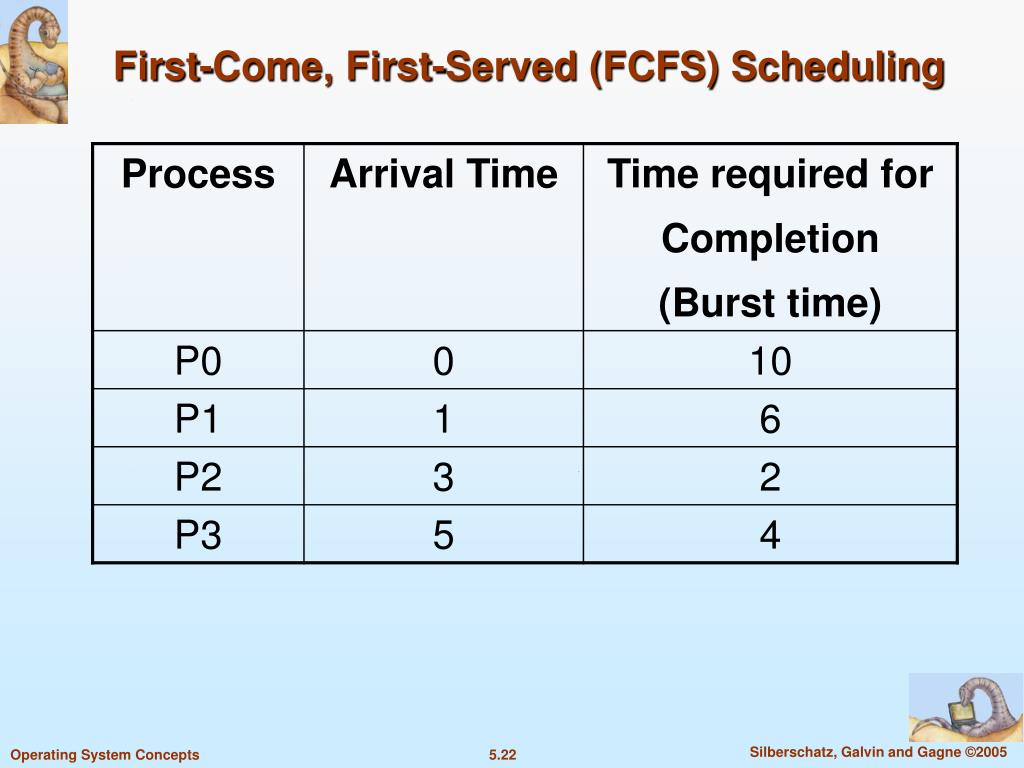
Its biggest advantage is predictability. If you know the order of arrival and each job’s CPU burst time, you can calculate the exact waiting time for every process. This makes FCFS a solid choice for batch systems where jobs are submitted in a controlled sequence, such as printing queues or simple data‑processing pipelines.
Another plus is implementation simplicity. A single queue, a couple of pointers, and a basic loop are enough to get a functional scheduler up and running. For educational purposes, FCFS provides a clear baseline against which more complex algorithms can be compared.
Weaknesses and Pitfalls
Fairness can be a double‑edged sword. Since longer jobs sit at the front of the line, shorter tasks may suffer from “convoy effect,” where a single lengthy process holds up the entire queue. This dramatically inflates average waiting time and reduces overall throughput.
FCFS also ignores the nature of the workload. If a real‑time process that needs immediate attention arrives after a CPU‑intensive batch job, the system will still wait for the batch job to finish, potentially missing critical deadlines.
When to Choose FCFS Over Other Schedulers
If your environment values simplicity over raw performance – think embedded controllers, basic micro‑services, or teaching labs – FCFS can be a perfect fit. It works well when tasks are roughly equal in length or when the cost of pre‑emptive scheduling outweighs the benefits.
Conversely, for interactive systems, multimedia applications, or any scenario where response time matters, more sophisticated algorithms like Shortest Job First (SJF) or Round‑Robin are usually preferable.
Real‑World Examples of FCFS in Action
Many print servers still rely on FCFS: each document is queued in the order received, and the printer processes them sequentially. Similarly, early versions of Unix used a basic FCFS scheduler before evolving into more complex multi‑level designs.
Even cloud job schedulers sometimes default to FCFS for low‑priority background tasks, allowing higher‑priority workloads to be scheduled on top of the simple queue.
Frequently Asked Questions
What does “non‑preemptive” mean in the context of FCFS?
Non‑preemptive means that once the CPU starts executing a process, it runs until the process finishes or voluntarily yields (for example, by requesting I/O). The scheduler does not interrupt it to give another process a turn.
Can FCFS cause a system to become unresponsive?
If a very long‑running task enters the queue early, shorter tasks can wait a long time, leading to noticeable lag. This is why FCFS is rarely used as the sole scheduler for interactive desktop environments.
How does FCFS handle I/O‑bound versus CPU‑bound processes?
FCFS treats them identically. An I/O‑bound process that quickly blocks for I/O will release the CPU, allowing the next queued job to start, but the order of entry still dictates overall progression.
Is FCFS suitable for real‑time operating systems?
Generally not. Real‑time systems need strict timing guarantees, and FCFS cannot prioritize urgent tasks that arrive later, making it unsuitable for hard‑real‑time constraints.
/FCFS_scheduling_example-1.png)