How Optical Chips Are Driving China’s AI Revolution
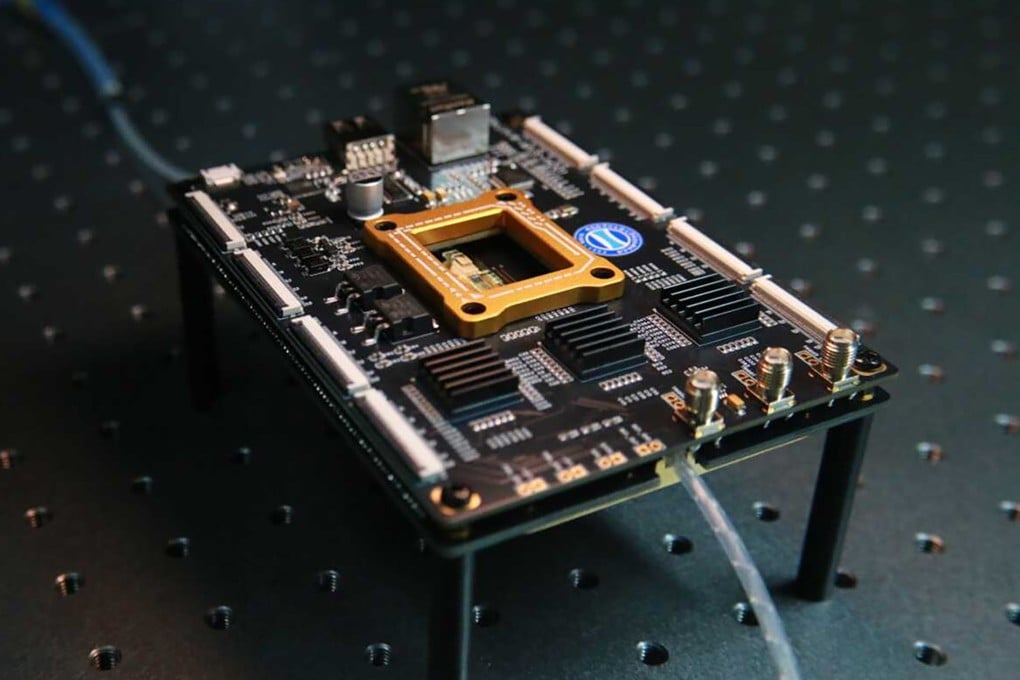
When you hear about China’s AI boom, the first images that come to mind are massive data centers humming with silicon‑based processors. Yet a quieter, faster technology is stealing the spotlight: optical, or photonic, chips. By using light instead of electricity to move data, these chips promise the kind of bandwidth and energy efficiency that traditional transistors struggle to provide. That promise has turned photonic computing into a strategic priority for Beijing, and the ripple effects are already reshaping research labs, startup ecosystems, and even government procurement policies.
Why Optical Chips Matter for AI
Artificial‑intelligence models, especially large language models, are notorious for their appetite for data movement. A single training run can shuffle petabytes of information across a cluster, consuming megawatts of power. Optical chips sidestep many of those bottlenecks. Light can travel through waveguides with virtually no resistance, enabling data rates that are orders of magnitude higher than copper interconnects while generating far less heat.
In practical terms, a photonic accelerator can execute matrix multiplications—the core operation of neural networks—using fewer clock cycles. The result is faster inference, lower latency for real‑time applications like autonomous driving, and a dramatically reduced carbon footprint. For a country that aims to lead in AI while meeting its climate pledges, the energy‑savings angle is more than a technical curiosity—it’s a policy lever.
China’s Strategic Push Behind Photonic Computing
The Chinese government has woven optical AI hardware into its broader “New Generation Artificial Intelligence Development Plan.” Funding streams now earmark billions of yuan for photonic research, and several national labs have been tasked with building prototype chips that can compete with the best silicon offerings from the United States and Europe.
Beyond direct grants, policy incentives encourage collaboration between universities and state‑backed enterprises. The Ministry of Industry and Information Technology (MIIT) recently launched a “Photonics for AI” pilot program, offering tax breaks to companies that integrate optical interconnects into their AI pipelines. This top‑down support accelerates the otherwise long R&D cycles typical of hardware innovation.
Key Players and Recent Milestones
- Huawei’s HiSilicon Photonic Division unveiled a 64‑core optical accelerator that can process 1.2 peta‑operations per second while staying under 150 watts—a figure that would make many conventional GPUs look wasteful.
- Alibaba’s DAMO Academy announced a partnership with the Shanghai Institute of Microsystem and Information Technology to fabricate silicon‑nitride waveguides capable of handling terahertz‑level data streams.
- Start‑up LightAI secured Series B funding to commercialize a chip‑scale optical neural network that promises “instantaneous” image classification for edge devices.
- China Academy of Sciences reported a successful demonstration of a fully optical transformer model, training a modest language model in half the time of a comparable electronic setup.
These milestones, while still early in the productization curve, signal that China is moving from proof‑of‑concept labs to market‑ready solutions. The momentum is reinforced by a growing ecosystem of component suppliers, from laser sources to photonic packaging firms, all eager to ride the wave.
Challenges Ahead
Despite the excitement, optical AI chips face hurdles that could slow their adoption. Manufacturing tolerances for waveguide alignment are far tighter than for traditional silicon wafers, demanding new fabrication lines and quality‑control protocols. Moreover, integrating photonic components with existing software stacks requires novel compilers and programming models—areas where the open‑source community is still catching up.
Another subtle obstacle is the talent gap. While China produces a steady stream of electrical engineers, expertise in photonics remains concentrated in a handful of research institutions. Universities are beginning to launch dedicated photonic‑AI curricula, but it will take years before the workforce can fully staff large‑scale production.
Finally, global supply chain dynamics add a layer of uncertainty. Critical materials such as indium phosphide and ultra‑pure silicon‑nitride are sourced worldwide, and any geopolitical tension could impact the steady flow of components needed for mass production.
What This Means for the Global AI Landscape
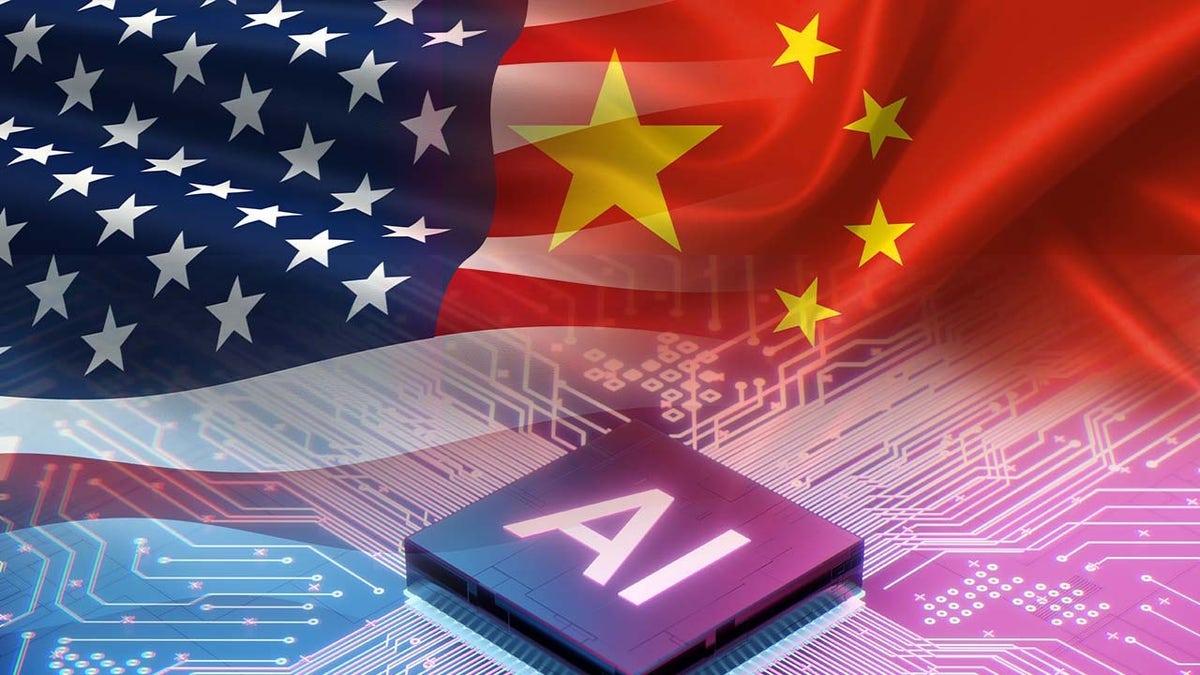
Optical chips are not a silver bullet, but they could tilt the competitive balance. If China can achieve commercial-scale photonic AI accelerators, the cost advantage of silicon‑only solutions may erode, prompting other nations to accelerate their own photonic programs. Already, the European Union’s Photonics2025 initiative and several U.S. defense labs are stepping up funding, suggesting a nascent “photonic race” may be on the horizon.
For businesses, the emerging hardware diversity offers a chance to optimize workloads. Companies that can abstract their AI models from the underlying accelerator—using frameworks that support both electronic and photonic backends—will be best positioned to leverage whichever technology delivers the best price‑performance mix.
FAQ
Q: How do optical chips differ from traditional GPUs?
A: GPUs rely on electronic transistors to move and process data, which incurs resistance and heat. Optical chips use light pulses traveling through waveguides, allowing much higher data rates with lower energy consumption, especially for operations like matrix multiplication.
Q: When can we expect photonic AI chips in consumer devices?
A: Early prototypes are already powering specialized data‑center workloads. Consumer‑grade products may appear in the next five to seven years, once packaging costs drop and software ecosystems mature.
Q: Are there security concerns unique to photonic processors?
A: Because optical signals are harder to tap without detection, some argue photonic links could improve hardware‑level security. However, new side‑channel attacks specific to light‑based systems are still being studied.
Q: Does China’s focus on optical AI chips affect global chip shortages?
A: Not directly. Photonic components use different raw materials than silicon GPUs, so they don’t compete for the same supply chains. Still, the overall demand for high‑purity materials could add pressure on niche suppliers.