How the EU’s 2021 AI Ethics Blueprint Enables Trustworthy AI
Understanding the EU’s 2021 AI Ethics framework
In April 2021 the European Commission unveiled a comprehensive approach to artificial intelligence that blends regulation with ethical guidance. The move was meant to translate the earlier “Ethics Guidelines for Trustworthy AI” into something legally binding while still respecting innovation. At its core, the EU’s 2021 AI Ethics blueprint introduces a risk‑based classification, a set of mandatory requirements, and a clear governance structure aimed at making AI systems safe, transparent, and respect fundamental rights.
Key pillars of the trustworthy‑AI model
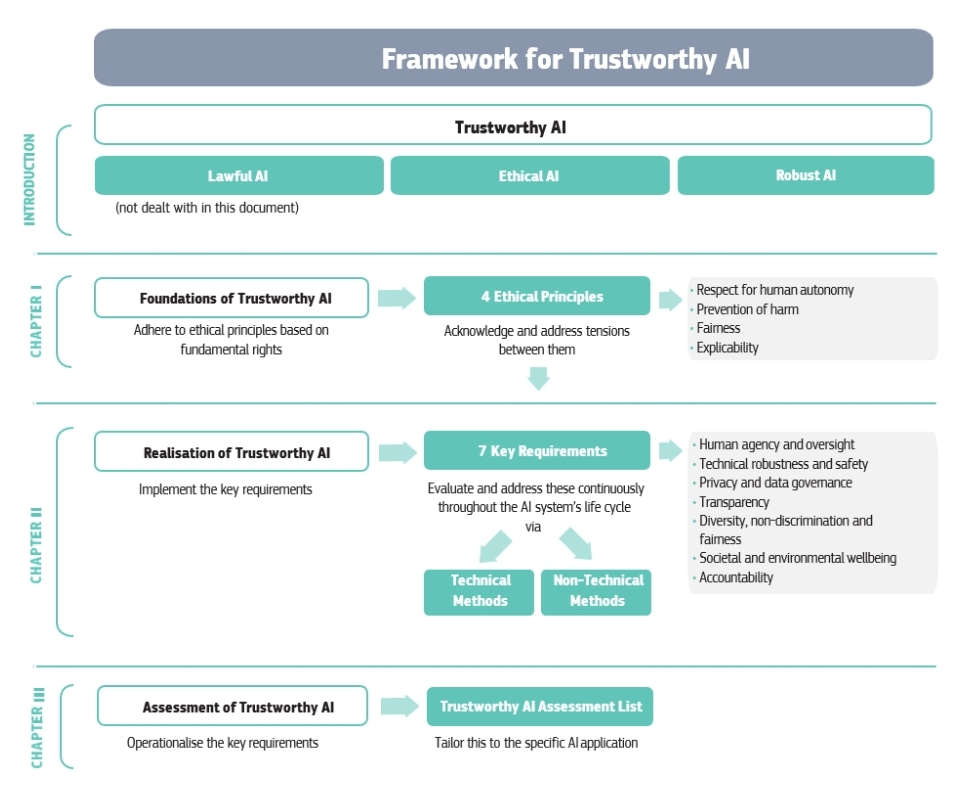
The blueprint rests on seven intertwined pillars that together define what “trustworthy” really means in practice:
- Human agency and oversight – systems must empower users and allow meaningful human intervention.
- Technical robustness and safety – AI should be reliable, resilient to attacks, and operate within defined limits.
- Privacy and data governance – personal data must be handled in line with GDPR, with strict safeguards against misuse.
- Transparency – developers should disclose the system’s purpose, capabilities, and limitations in clear language.
- Diversity, non‑discrimination, and fairness – algorithms must avoid bias and promote equitable outcomes.
- Societal and environmental wellbeing – AI should contribute positively to society and minimize ecological impact.
- Accountability – clear responsibility lines and traceability mechanisms are required for every high‑risk AI system.
Risk‑based categorisation: From low to high
Not every AI application is treated alike. The EU’s 2021 AI Ethics approach sorts systems into four risk tiers:
- Unacceptable risk – technologies such as social scoring or subliminal manipulation are prohibited outright.
- High risk – applications that affect safety, livelihoods, or fundamental rights (e.g., biometric identification in public spaces, AI‑driven recruitment tools). These must undergo conformity assessments before deployment.
- Limited risk – systems that pose moderate concerns (e.g., chatbots). Providers are encouraged to follow transparency obligations, such as informing users they are interacting with AI.
- Minimal risk – most everyday AI tools fall here and are subject only to voluntary codes of conduct.
By focusing regulatory pressure on the high‑risk tier, the EU hopes to preserve the dynamism of low‑risk innovation while protecting citizens where it matters most.
Compliance steps for developers and users
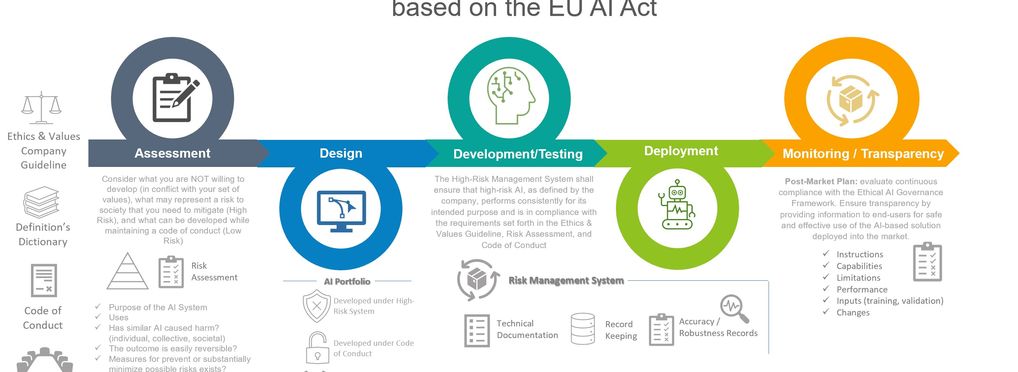
For companies looking to align with the EU’s 2021 AI Ethics framework, a practical roadmap can be broken down into four stages:
- Risk assessment: Identify the intended use, target audience, and potential impact. Map the system against the high‑risk criteria to determine the level of oversight required.
- Documentation and data governance: Compile a technical dossier that includes data provenance, preprocessing methods, and validation results. Ensure data handling complies with GDPR’s consent and minimisation principles.
- Testing and conformity: Conduct robustness checks, bias audits, and human‑in‑the‑loop simulations. For high‑risk AI, submit the dossier to a notified body for an official conformity assessment.
- Post‑market monitoring: Implement continuous monitoring, incident reporting, and mechanisms for users to raise concerns. Update the system as new risks emerge or as regulatory guidance evolves.
Adopting these steps not only reduces legal exposure but also builds trust with customers and regulators alike.
Transparency in practice: What users should see
Transparency obligations translate into tangible user‑facing measures. For instance, a facial‑recognition system deployed in a train station must display clear signage indicating that biometric analysis is occurring, the purpose of the analysis, and a contact point for inquiries. Similarly, AI‑generated content (like deep‑fake videos) should carry a visible disclaimer that alerts viewers to its synthetic nature.
These “information notices” are not merely cosmetic; they give individuals the agency to consent, opt‑out, or seek alternatives, aligning with the human‑centric ethos of the EU’s ethics blueprint.
Accountability mechanisms and governance bodies
Beyond technical safeguards, the EU introduces institutional layers to enforce the framework. National supervisory authorities, coordinated by the European Artificial Intelligence Board, will oversee conformity assessments and handle cross‑border incidents. In addition, the European Data Protection Board (EDPB) ensures that AI‑related data practices stay consistent with privacy law.
Companies are encouraged to appoint an internal “AI ethics officer” or a cross‑functional committee that reports directly to senior management. Such structures help embed accountability into corporate culture rather than treating it as an after‑thought.
Impact on European businesses and global players
While the regulations target entities operating within the EU, their extraterritorial reach means that any firm selling AI‑enabled products to EU citizens must comply. This has spurred a wave of “compliance‑by‑design” strategies, where ethical considerations are baked into the development lifecycle from day one.
Many non‑EU tech giants have already begun aligning their internal AI policies with the EU’s standards, recognizing that a trustworthy reputation can be a competitive advantage in a market that increasingly values ethical tech.
Future outlook: From guidelines to law
The 2021 AI Ethics framework currently exists as a proposal pending adoption by the European Parliament and Council. If approved, it will become the world’s first comprehensive AI regulation, setting a benchmark for other regions. Observers anticipate that the final text may tighten some requirements—especially around high‑risk systems—but the overarching risk‑based philosophy is expected to stay intact.
Stakeholders are advised to stay tuned to legislative updates, participate in public consultations, and continuously refine their internal AI governance to keep pace with the evolving landscape.
Quick FAQ
What qualifies as a “high‑risk” AI system under the EU’s 2021 framework?
High‑risk AI includes applications that can significantly affect safety or fundamental rights, such as biometric identification in public spaces, AI used in recruitment, credit scoring, or medical diagnostics. These systems must undergo a formal conformity assessment before they can be placed on the market.
How does the EU ensure transparency for AI‑generated content?
Providers must clearly label synthetic media, disclose the AI’s purpose, and offer a means for users to obtain additional information or raise concerns. The goal is to prevent deception and give people the ability to make informed choices.
Do small startups need to follow the same rules as large corporations?
All entities deploying high‑risk AI within the EU are subject to the same obligations, regardless of size. However, the regulation includes provisions for proportionality, meaning that the depth of documentation and assessment can be scaled to the complexity and impact of the system.
Can an AI system be re‑classified after deployment?
Yes. If a system’s usage changes or new evidence reveals additional risks, it may be re‑evaluated and moved to a higher risk tier, triggering the corresponding compliance requirements.