How to Diagnose and Fix Electrical Issues in a 2021 VW Atlas
Spotting the Tell‑Tale Signs of Electrical Trouble
When the dashboard lights flicker, the power windows crawl, or the infotainment system refuses to boot, most owners suspect a blown fuse. In a 2021 VW Atlas, however, the culprit can be deeper than a simple overload. Common symptoms include intermittent headlights, a dead battery despite normal charging voltage, and warning lights that appear and vanish without a clear pattern. Catching these cues early can save you from a costly tow.
Essential Tools for a DIY Diagnosis
- OBD‑II scanner with VW‑specific coding – lets you read fault codes beyond the generic P‑codes.
- Multimeter – for checking voltage, resistance, and continuity across circuits.
- Battery load tester – evaluates the health of the 12‑V pack under real‑world draw.
- Wire harness inspection light – shines through connectors to spot corrosion.
- Basic hand tools (screwdrivers, socket set) and a trim removal kit.
Step‑by‑Step Diagnostic Process
1. Pull the fault codes. Connect your VW‑compatible OBD‑II tool, navigate to the “Body Control Module” (BCM) section, and note any stored or pending codes. Codes like C1234 (door module fault) or B0560 (low‑voltage battery) point you toward the affected subsystem.
2. Verify battery health. A healthy Atlas battery should hold >12.6 V at rest and stay above 13.5 V while the engine runs. If the voltage drops quickly under load, the battery may be the first replacement.
3. Inspect fuses and relays. The Atlas uses a dual‑row fuse box under the hood and a secondary box in the passenger footwell. Look for blown or darkened fuses, and tap relays gently – a faulty relay often makes a faint click when pressed.
4. Check ground straps. Corroded or loose grounding points cause a cascade of electrical glitches. Using a multimeter, set it to continuity mode and touch one probe to the chassis ground bolt and the other to the battery negative terminal. A reading of 0 Ω (or near zero) confirms a solid ground.
5. Test the BCM voltage. With the ignition on, measure the voltage at the BCM connector. It should read close to the battery voltage (around 13.8 V). A significant drop suggests a wiring issue before the module.
6. Scan for software updates. Volkswagen periodically releases firmware patches for the BCM and infotainment unit. An outdated module can misinterpret sensor data, masquerading as a hardware fault.
Typical Faults and How to Repair Them
Faulty Power‑Window Motor Relay – Drivers often report windows that only work on one side. Replace the relay (part number 09 023 211 A) – a simple swap that restores full operation.
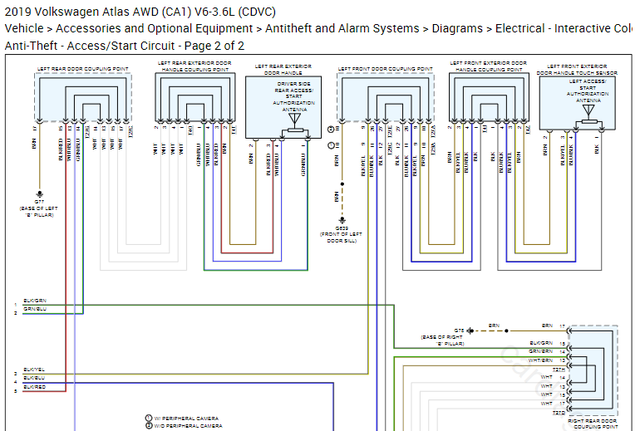
Corroded Front‑Door Wiring Harness – The Atlas’s front‑door latch wires run close to the water channel. If you notice moisture or a metallic odor, disconnect the harness, clean the contacts with an electronics‑grade cleaner, and re‑apply dielectric grease before re‑installing.
Infotainment Freeze – A common software‑related issue. Perform a hard reset by holding the power button for 10 seconds, then reflash the system using VW’s VCDS software if the problem recurs.
Battery Drain from After‑Market Accessories – After‑market LED lights or a remote start kit can draw several hundred milliamps when the vehicle is off. Trace the accessory’s power feed, install a proper fuse, or relocate the wiring to a switched‑12 V source.
Preventive Maintenance Tips
- Inspect all visible connectors every 12 000 miles; reseat any that feel loose.
- Apply a thin layer of silicone‑based spray to rubber boot seals around the fuse boxes to keep moisture out.
- Schedule a software update during routine service – it’s often free and can resolve latent glitches.
- Use a high‑capacity, AGM‑type battery if you frequently run accessories like heated seats or a roof rack.
FAQ
Q: My Atlas won’t start, but the lights are bright. What should I check first?
A: Start with the battery voltage and the main fusible link. If the voltage is above 12.5 V and the fusible link is intact, move on to the starter relay and the BCM power feed.
Q: How often should I replace the BCM fuse?
A: The BCM fuse is rated for 30 A and typically lasts the life of the vehicle. Replace it only if you see a blown fuse or intermittent BCM‑related warnings.
Q: Can I reset the warning lights after fixing an electrical issue?
A: Yes. After clearing any fault codes with the OBD‑II scanner, turn the ignition off for a minute, then restart the vehicle. The warning lights should remain off if the repair was successful.
Q: Is it safe to drive with a flickering headlight?
A: It’s best to address it promptly. Flickering often indicates a poor ground or a failing headlamp bulb, both of which can affect other circuits if left unchecked.