How to Read Tire Tread Depth and Why It Matters for Safety
When you glance at the rubber on your car, the grooves you see are more than just a design choice – they’re a critical safety feature. Understanding tire tread depth measurements helps you gauge traction, predict wear, and decide when a replacement is overdue. In this guide we’ll demystify the numbers, walk through the tools, and share practical tips to keep your wheels performing at their best.
Why Tread Depth Is a Safety Indicator
The primary job of a tire’s tread is to channel water, gravel, and other debris away from the contact patch. Deeper grooves mean water can escape more efficiently, reducing the risk of hydro‑hydroplaning on wet roads. As the tread wears down, the tire’s ability to grip the road diminishes, leading to longer stopping distances and poorer handling.
Beyond wet conditions, adequate tread also improves traction on loose surfaces like snow or sand. That’s why many insurance policies and vehicle inspections reference tread depth as a key factor in assessing roadworthiness.
How Tire Tread Depth Is Measured
There are three common methods, each suited to a different level of precision.
- Tread depth gauge: A small metal or plastic tool that slides into the groove and displays the depth in millimeters or 32nds of an inch. This is the most accurate DIY option.
- Penny or quarter test: Insert a U.S. coin into a groove; if you can see the top of Lincoln’s head (penny) or Washington’s shield (quarter), the tread is shallow.
- Digital tire scanners: Some modern service centers use laser‑based devices that map the entire tread surface, producing a detailed wear report.
Whichever method you choose, aim to measure at several points around the tire – typically the outer edge, middle, and inner edge – because wear is rarely uniform.
Interpreting the Numbers
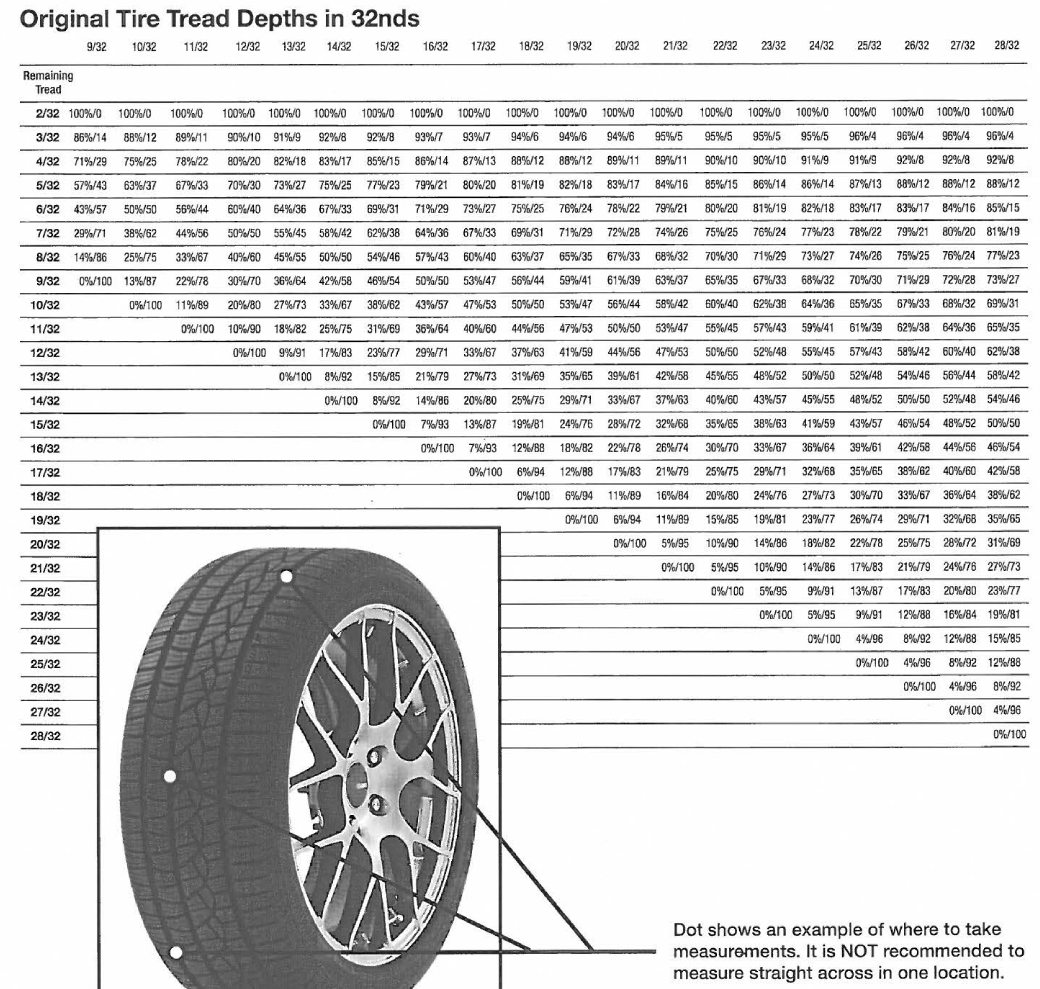
Most manufacturers list the original tread depth in the vehicle’s owner’s manual; for passenger cars it’s usually around 8 to 9 mm (about ⅓ inch). In the U.S., the legal minimum is 2/32 inch (≈1.6 mm). Anything below that is considered unsafe and illegal on public roads.
Many experts recommend replacing tires once the depth reaches 4 mm (≈5/32 inch) in dry climates and 3 mm (≈4/32 inch) if you frequently drive on wet or icy roads. The difference may seem small, but each millimeter lost translates into a noticeable drop in braking performance.
Factors That Accelerate Wear
Not all tread loss is created equal. Here are the main culprits:
- Driving habits: Aggressive acceleration, hard braking, and cornering at high speeds generate excess heat, which softens the rubber and speeds up abrasion.
- Road surface: Rough pavement, gravel, and potholes literally grind away the tread.
- Improper inflation: Under‑inflated tires flex more, creating extra friction, while over‑inflated tires concentrate wear in the center of the tread.
- Vehicle alignment: Misaligned wheels cause uneven pressure, leading to one side of the tread wearing faster than the other.
Keeping an eye on these variables can extend the life of your tires and keep tread depth measurements within safe ranges.
When to Replace Your Tires
Beyond the legal minimum, look for visual cues: cracks in the sidewall, bulges, or a “worn” appearance across the entire surface. Even if a tire measures just above 2/32 inch, a combination of age (most tires age out after six years) and uneven wear may justify a replacement.
If you notice a sudden drop in tread depth after a short period, it could signal an alignment issue or a tire defect. In such cases, a professional inspection is advisable before continuing to drive.
Tips for Maintaining Healthy Tread Depth
Regular maintenance is the simplest way to preserve traction.
- Check tire pressure monthly and before long trips; use the vehicle manufacturer’s recommended PSI.
- Rotate tires every 5,000‑8,000 km (or as specified in the owner’s manual) to promote even wear.
- Balance wheels after each rotation to reduce vibrations that can unevenly wear the tread.
- Inspect the tread depth at least once a month, especially before seasonal changes.
- Avoid riding over sharp objects or deep potholes whenever possible; even a brief impact can shave off precious millimeters.
Following these habits not only prolongs the life of your tires but also ensures that the tread depth measurements stay within the safety window.
FAQ
What is the easiest way to check tread depth without a gauge?
Place a penny into a groove with Lincoln’s head upside down. If you can see the top of his head, the tread is at or below 2/32 inch and the tire should be replaced.
Do all tires wear at the same rate?
No. Seasonal tires, performance tires, and all‑season tires use different rubber compounds, which affect how quickly the tread degrades. Driving conditions and maintenance habits also play a big role.
Can I use the same tire on front and rear axles?
While many vehicles use identical tires on all four corners, some manufacturers recommend staggered setups (different sizes or tread patterns) for optimal handling. Always follow the vehicle’s specifications.
How often should I rotate my tires?
Most experts suggest rotating every 5,000–8,000 km, or roughly every 3,000–4,000 miles. If you drive a front‑wheel‑drive car, a front‑to‑rear rotation works best; all‑wheel‑drive vehicles often benefit from a “cross” pattern.