Inside Electric Vehicles: Key Components and How They Work
Electric vehicles (EVs) are more than just cars that run on electricity; they are intricate systems where every part plays a role in efficiency, range, and driving experience. Understanding the key components helps demystify why an EV feels different from a gasoline‑powered counterpart and what innovations are steering the industry forward. Below, we break down the major systems that make electric mobility possible, from the heart‑pumping motor to the subtle climate‑control tricks that keep occupants comfortable.
The Electric Powertrain: Motor, Inverter, and Battery Pack
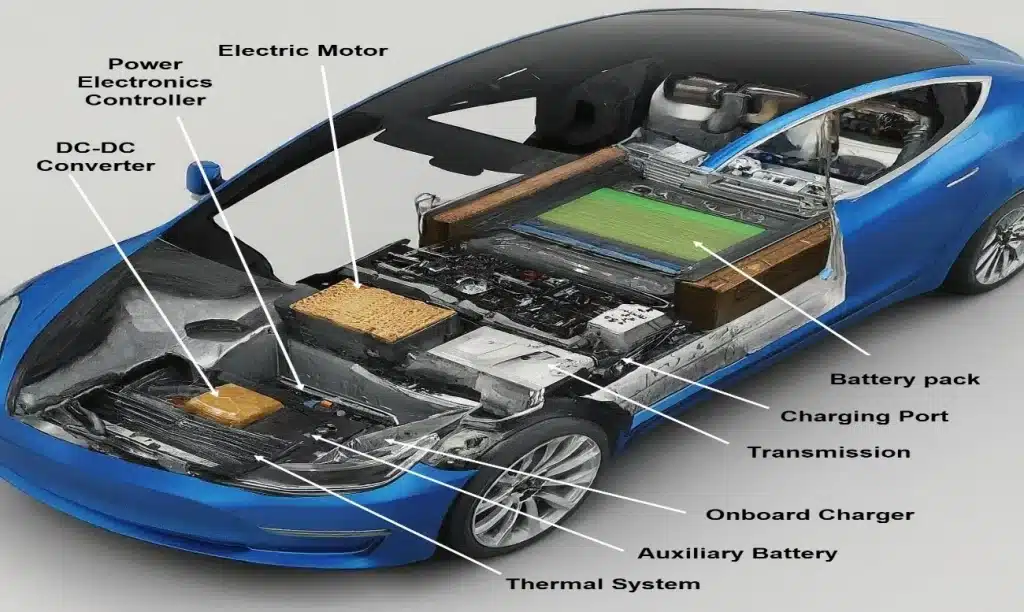
The powertrain is the backbone of any EV. At its core sits an electric motor—often a permanent‑magnet synchronous motor (PMSM) or an induction motor—converting electrical energy into mechanical torque with instant response. Adjacent to the motor, the inverter translates the high‑voltage DC from the battery into three‑phase AC that the motor can use, while also handling regenerative braking to recover energy.
Behind these two, the battery pack stores the energy. Modern packs typically use lithium‑ion cells arranged in modules, delivering voltages between 300 V and 800 V depending on the vehicle. The pack’s architecture balances energy density (how much power it can store) against thermal management, safety, and cost.
Energy Storage: Battery Technologies and Management
Beyond the basic lithium‑ion chemistry, manufacturers are experimenting with solid‑state, lithium‑iron‑phosphate (LFP), and even nickel‑metal‑hydride variations to improve range or reduce fire risk. Each chemistry brings trade‑offs: LFP offers longer cycle life but lower energy density, while solid‑state promises higher capacity but remains in early‑stage production.
A dedicated Battery Management System (BMS) monitors cell voltage, temperature, and state of charge, ensuring the pack operates within safe limits. The BMS also balances cells during charging, preventing any single cell from becoming a weak link that could degrade overall performance.
Charging Infrastructure and Onboard Systems
Charging an EV can happen at home, at work, or at public stations, and the speed depends on both the charger’s power output and the vehicle’s onboard charger capacity. Level 1 (120 V) chargers trickle charge over many hours, while Level 2 (240 V) units can replenish a typical sedan in 4–8 hours. DC fast chargers bypass the onboard charger, delivering up to 350 kW and adding 80 % range in 20‑30 minutes for compatible models.
Onboard, the vehicle’s power electronics manage the flow of electricity, communicating with external chargers via protocols such as CCS (Combined Charging System) or CHAdeMO. These systems also handle safety checks, like verifying the connector’s integrity before allowing high‑current flow.
Auxiliary Systems: HVAC, Braking, and Vehicle Controls
While the motor and battery dominate headlines, auxiliary systems are crucial for comfort and safety. Modern EVs use heat‑pump HVAC systems that recycle waste heat from the motor or battery to warm the cabin, dramatically improving cold‑weather range compared to traditional resistance heaters.
Regenerative braking, coordinated by the vehicle’s control unit, converts kinetic energy back into electrical energy during deceleration, feeding it into the battery. This not only extends driving range but also reduces wear on friction brakes.
Advanced driver‑assistance features—such as adaptive cruise control, lane‑keeping assist, and over‑the‑air software updates—rely on a network of sensors and high‑speed data buses. These electronics draw relatively little power but add considerable value to the overall driving experience.
Putting It All Together: Why Component Integration Matters
The magic of an EV lies in how seamlessly these components interact. A well‑designed thermal management system keeps the battery at optimal temperature, allowing the BMS to maintain higher charge levels without risking degradation. Simultaneously, efficient power electronics reduce energy loss, ensuring more of the stored electricity reaches the wheels. The result is a vehicle that feels responsive, offers respectable range, and demands less routine maintenance than its internal‑combustion rivals.
Frequently Asked Questions
- How far can an electric vehicle travel on a single charge? Range varies widely; compact models may achieve 150‑200 miles, while premium sedans and SUVs often exceed 300 miles under typical driving conditions.
- Is regenerative braking enough to eliminate the need for traditional brakes? Not entirely. Regenerative braking captures a portion of kinetic energy, but friction brakes are still necessary for rapid stops and as a backup.
- Can I charge my EV at home with a regular outlet? Yes, using a Level 1 charger (120 V) plugged into a standard household socket, though charging will be slow. Upgrading to a Level 2 home charger dramatically reduces charging time.