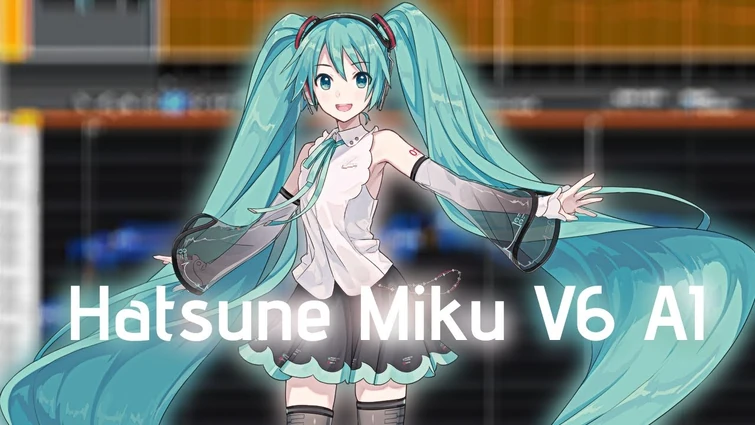
Inside Hatsune Miku’s AI Voice: How the Virtual Singer Works
Fans have been humming to Hatsune Miku for more than a decade, but the technology behind her signature timbre has taken a surprising turn. This deep dive explores Hatsune Miku’s AI voice, tracing its roots from the original VOCALOID engine to the cutting‑edge neural networks that now add nuance and flexibility. Whether you’re a hobbyist composer or just curious about digital singers, understanding the AI layer reveals why Miku feels more alive than ever.
From VOCALOID to AI: The Evolution of Miku’s Sound
Crypton Future Media first released Miku in 2007 using Yamaha’s VOCALOID2 engine, a rule‑based synthesis system that stitched together phoneme samples recorded by voice actress Saki Fujita. The early voicebank offered a fixed set of tones, so creators had to manually adjust pitch bends and vibrato to mimic expression.
Fast forward to the 2020s, and the same voice data is being fed into machine‑learning models that can learn patterns of human singing. Rather than relying solely on pre‑programmed rules, these AI systems predict how a vocalist would naturally vary pitch, dynamics, and timing across an entire phrase.
Because the underlying recordings remain the same, the AI version still sounds unmistakably like the original Miku, yet it can now generate phrases that were never explicitly programmed into the VOCALOID library.
How AI Generates Hatsune Miku’s Voice
At the core of modern AI voice synthesis are two complementary techniques: text‑to‑speech (TTS) models and voice conversion networks. A TTS model such as a WaveNet‑style neural vocoder takes a lyric string and a musical score, then produces a raw waveform that mimics human articulation.
Voice conversion (VC) layers, often built with models like RVC or DiffWave, reshape the output to match Miku’s timbre. These networks are trained on thousands of minutes of Saki Fujita’s recordings, learning subtle inflections that give Miku her airy quality.
The workflow typically follows three steps:
- Lyric and note input: Users supply the words and pitch contour in a standard format (e.g., MIDI + lyric file).
- Neural synthesis: A TTS engine predicts the raw singing waveform, incorporating dynamics based on the musical score.
- Timbral matching: A VC model refines the waveform, ensuring the result carries Miku’s characteristic brightness and breathiness.
Because each step is differentiable, developers can fine‑tune the system on new styles—say, a jazz swing feel—without re‑recording any new samples.
What the New Tech Means for Creators
For independent musicians, AI‑enhanced Miku lowers the barrier to producing professional‑sounding tracks. Previously, achieving realistic expression required painstaking manual editing of pitch curves; now a single click can add natural vibrato or subtle timing shifts.
Additionally, the AI can adapt to unconventional vocal demands, such as micro‑tonal scales used in experimental electronic music. Since the model predicts the waveform directly, it can render pitches that fall between the standard semitone steps of a MIDI keyboard.
Another practical benefit is faster iteration. Creators can tweak a lyric line, hit “render,” and hear a fully synthesized vocal within minutes—a workflow that previously took hours of manual tweaking.
Challenges and Ethical Questions
While AI opens creative doors, it also raises concerns about authenticity and ownership. The voice model is trained on a specific performer’s recordings, and any commercial use may require permission from both the voice actress and Crypton.
There’s also the risk of deep‑fake misuse. An AI capable of mimicking Miku’s voice could be employed to generate unauthorized songs or even non‑musical content that falsely appears to be endorsed by the brand.
Industry groups are beginning to draft guidelines for responsible AI vocal synthesis, emphasizing clear labeling of AI‑generated content and transparent licensing arrangements.
Real‑World Applications Beyond Music
Beyond song production, developers have experimented with Miku’s AI voice for interactive experiences. Virtual reality concerts now feature real‑time vocal modulation, allowing Miku to “react” to audience input on the fly.
Educational tools also benefit: language‑learning apps can use the AI voice to demonstrate proper pronunciation in Japanese, leveraging Miku’s clear enunciation as a teaching aid.
Even gaming sees integration, with characters that can sing dynamically based on player actions, thanks to the low‑latency synthesis offered by modern AI models.
Future Directions: Toward More Expressive Synthesizers
Researchers are exploring multimodal models that combine audio, video, and motion capture, aiming for a fully embodied virtual singer. Imagine a system where Miku not only sings but also gestures in perfect sync with the music, all driven by AI.
Another frontier is emotional conditioning, where a model can be prompted to sing with “sad,” “joyful,” or “mysterious” tones, adding a narrative layer without manual effect editing.
As these advances converge, the line between a pre‑programmed voicebank and a truly adaptive digital performer continues to blur, promising richer collaborations between humans and virtual artists.
FAQ
Q: Is Hatsune Miku’s AI voice the same as the original VOCALOID?
A: The AI voice builds on the original sample set but uses neural networks to generate new expressions, so the timbre remains familiar while offering greater flexibility.
Q: Do I need special software to use the AI version?
A: Most AI‑enhanced tools integrate with existing DAWs via plugins or standalone applications, making the transition relatively seamless for users already familiar with VOCALOID.
Q: Can I create a completely new singing style with Miku’s AI?
A: Yes, by adjusting the neural model’s parameters or providing style references, creators can coax Miku into genres ranging from classical opera to lo‑fi beats.
Q: What legal steps should I take before releasing an AI‑generated Miku song?
A: It’s advisable to consult Crypton’s licensing terms and, if the voice actress’s performance is central, obtain appropriate clearances to avoid infringement.