Is Hydrogen a Metal or a Non‑Metal? The Science Explained
When you hear the question “hydrogen metal or nonmetal?” it’s easy to picture a simple yes‑or‑no answer. In reality, hydrogen sits on the borderline, borrowing traits from both camps. To untangle this paradox, we’ll look at how chemists define metals, where hydrogen lives on the periodic table, and what its behavior tells us about its true nature.
What Makes an Element a Metal?
Metals share a handful of hallmark properties: they conduct electricity and heat well, are malleable, and usually have a shiny, metallic luster. On the atomic level, metals tend to lose electrons easily, forming positive ions. Their outer electrons are delocalized, creating a “sea of electrons” that flows freely through the crystal lattice.
Where Hydrogen Fits on the Periodic Table
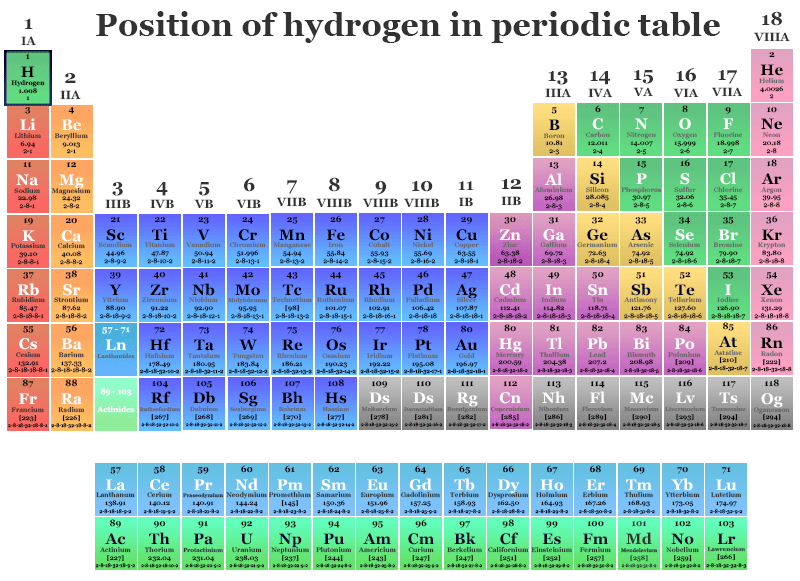
Hydrogen sits at the very top of group 1, the alkali metals, but it doesn’t behave like its cousins sodium or potassium. Its electron configuration is 1s¹, meaning it has a single electron in the first shell. This lone electron can be lost to form H⁺ or shared to make H⁻, giving hydrogen the flexibility to act as either an acid or a hydride.
Physical Properties: Metal‑Like or Non‑Metal?
- State at room temperature: a colourless, odorless gas – a classic non‑metal trait.
- Electrical conductivity: negligible under normal conditions, unlike the high conductivity of metals.
- Luster: no metallic sheen; hydrogen gas is invisible.
- Melting/boiling points: 14 K (−259 °C) and 20 K (−253 °C), far lower than any metal.
These facts point squarely toward a non‑metal classification.
Chemical Behavior: The Dual Personality
Hydrogen’s chemistry is where the ambiguity shines. It forms covalent bonds with nonmetals (e.g., water, methane) and ionic bonds with highly electropositive elements (e.g., lithium hydride). Its electronegativity, 2.20 on the Pauling scale, sits between that of carbon (2.55) and chlorine (3.16), giving it a chameleon‑like ability to share or accept electrons.
Metallic Hydrogen: When Pressure Changes Everything
Under ordinary conditions hydrogen is definitely a non‑metal. Yet, if you squeeze it to pressures above roughly 400 gigapascals—about four million times atmospheric pressure—the atoms are forced so close together that electrons delocalize, and hydrogen adopts a metallic lattice. This phase, dubbed “metallic hydrogen,” has been observed in laboratory experiments and is believed to exist naturally in the cores of gas giants like Jupiter and Saturn.
Metallic hydrogen would conduct electricity and perhaps even become a superconductor at relatively high temperatures, a tantalising prospect for future energy technologies. However, once the pressure is released, it reverts to its familiar gaseous, non‑metal form.
Why Hydrogen Defies Simple Classification
Because classification schemes are built on trends, not absolutes, hydrogen slips through the cracks. It shares the group 1 position with metals, yet lacks their physical signatures. Its ionization energy (13.6 eV) is higher than any alkali metal, making electron loss energetically costly. At the same time, its electron affinity (0.75 eV) is comparable to that of the halogens, supporting anionic behavior.
In short, hydrogen is a “borderline” element—its properties sit at the crossroads of metal and non‑metal, and the extreme conditions of the universe can tip it one way or the other.
Practical Implications of Hydrogen’s Dual Nature
Understanding hydrogen’s ambivalence matters beyond academic curiosity. In fuel cells, hydrogen’s ability to release an electron (forming H⁺) powers the electrochemical reaction that generates electricity. In metallurgy, hydrogen can embrittle metals, a phenomenon linked to its small size and its tendency to occupy interstitial sites, acting more like a non‑metal impurity.
Meanwhile, researchers chasing metallic hydrogen hope to unlock a room‑temperature superconductor, which could revolutionise power transmission. The challenge remains: stabilising the metallic phase without the crushing pressures of a diamond‑anvil cell.
Summing Up the Evidence
At standard temperature and pressure, hydrogen behaves unmistakably as a non‑metal: it’s a gas, it’s a poor conductor, and it forms covalent bonds. Yet, its position on the periodic table, its capacity to lose or gain an electron, and the existence of metallic hydrogen under extreme pressure all hint at a metallic side.
So, when you ask “hydrogen metal or nonmetal?” the most accurate answer is: it’s a non‑metal that can become metallic under conditions far beyond everyday life. Its duality makes hydrogen a fascinating case study in how nature resists tidy categories.
Frequently Asked Questions
Is hydrogen considered a metal?
Under normal conditions no; hydrogen is classified as a non‑metal. Only when subjected to pressures above ~400 GPa does it transition into a metallic state.
Can hydrogen act like a metal in any practical applications?
Not directly. Metallic hydrogen has only been produced in laboratory settings and has not yet been harnessed for everyday use. Its potential as a superconductor remains a research focus.
Why is hydrogen placed in group 1 if it’s a non‑metal?
Hydrogen shares a single valence electron with the alkali metals, which is why it occupies the top of group 1. However, its high ionization energy and non‑metallic properties set it apart from the rest of the group.
Does metallic hydrogen exist naturally?
Scientists believe metallic hydrogen is present in the cores of massive planets like Jupiter, where the immense pressure creates the necessary environment.