Mastering OSINT: A Practical Guide to Open Source Intelligence
Open source intelligence, or OSINT, is the art of turning publicly available data into actionable insight. Whether you’re a journalist chasing a story, a security analyst mapping a threat, or just a curious mind, the same basic principles apply. In the next few minutes we’ll walk through the tools, techniques, and mindset that let you harvest useful information without ever stepping beyond the public web.
Why OSINT Still Matters in a Data‑Rich World
Every day billions of bits of information flow through social media, government portals, and corporate sites. While big‑data platforms can crunch numbers, they often miss the nuanced context that a human can spot. OSINT bridges that gap: it lets you interpret raw data, validate claims, and spot trends before they hit mainstream reports.
Think of OSINT as a digital detective’s toolbox. The goal isn’t to break into anything—just to piece together clues that are already out there. That legal clarity makes it attractive for businesses, NGOs, and even law‑enforcement agencies looking for low‑cost, high‑value intelligence.
Building a Solid OSINT Workflow
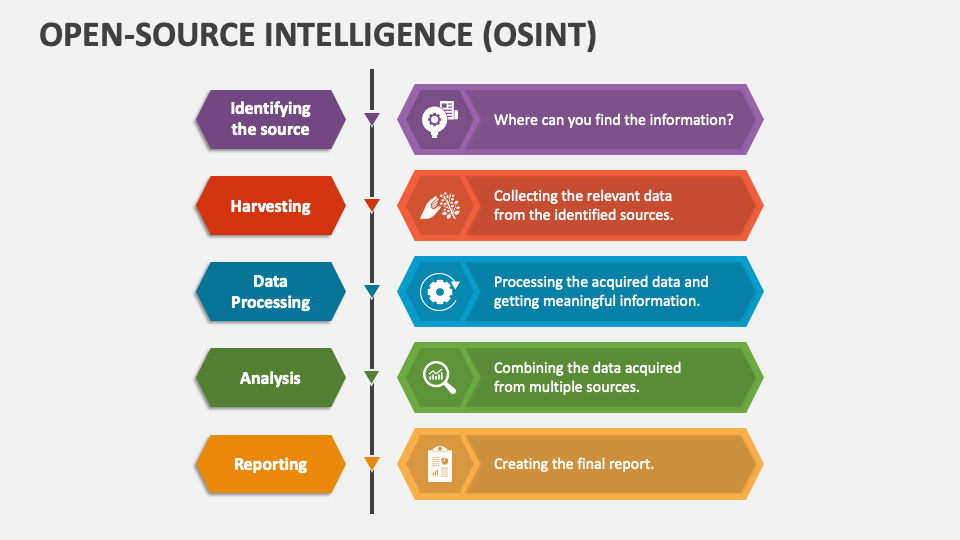
A good workflow saves time and reduces the chance of missing critical details. Here’s a straightforward four‑step loop you can adopt:
- Define the objective. Start with a clear question—“Who is behind this disinformation campaign?” or “What are the supply‑chain risks for this product?”
- Scope the sources. Identify which platforms—social networks, public registries, news archives—are most likely to hold answers.
- Collect and organize. Use automated scrapers or manual searches, then store findings in a spreadsheet or a note‑taking app with consistent tags.
- Analyze and verify. Cross‑check facts, look for corroborating evidence, and flag any anomalies for deeper investigation.
Loop back whenever new information surfaces; OSINT is rarely a linear process.
Essential Tools for the Modern OSINT Practitioner
No single tool can cover every need, but a balanced toolkit makes the job smoother. Below are categories and a few popular options that are either free or have generous free tiers.
- Search Engines. Google is obvious, but don’t overlook DuckDuckGo for privacy‑focused queries, or specialized engines like Shodan for IoT device footprints.
- Social Media Monitors. Tools such as TweetDeck, Hootsuite, or the open‑source Maltiverse let you track hashtags, usernames, and emerging chatter in real time.
- Domain & IP Lookup. WhoisXML API, VirusTotal, and Censys reveal ownership details, SSL certificates, and historical snapshots.
- Document & Image Analysis. ExifTool extracts metadata; Google Reverse Image Search and Tineye locate where an image first appeared.
- Geolocation & Mapping. Google Earth Pro and OpenStreetMap let you plot coordinates, while Geofeedia (when available) filters geo‑tagged posts.
The key isn’t to collect everything but to pick the right instrument for the question at hand.
Techniques That Turn Raw Data Into Insight
Once you have sources, a handful of proven techniques help you sift signal from noise.
Boolean and Advanced Search Operators
Learning to craft precise queries can cut search time dramatically. Combine keywords with operators like site:, intitle:, and filetype:. For example, intitle:"annual report" filetype:pdf site:gov zeroes in on official financial documents.
Temporal Filtering
Many platforms let you restrict results to a date range. That’s crucial when you need to see how a story evolved or when a piece of misinformation first surfaced.
Network Mapping
By charting relationships—who follows whom on Twitter, which domains link to a central hub—you can visualize influence clusters. Free tools like Gephi or browser‑based Kumu make these graphs accessible without a PhD in data science.
Sentiment and Language Cues
Beyond the words themselves, tone can reveal intent. Simple sentiment‑analysis plugins, or even manual observation of emotive language, help you gauge whether a post is genuine, promotional, or manipulative.
Ethical and Legal Considerations
OSINT is powerful, but it carries responsibility. Respect terms of service—scraping a site that explicitly forbids it can expose you to legal risk. Also, avoid collecting personal data that isn’t already public, and always anonymize sources when you share findings.
Many organizations follow the “least intrusive” principle: gather the minimum amount of information needed to answer the question, and discard anything superfluous. That habit not only keeps you on the right side of the law but also maintains credibility with your audience.
Putting It All Together: A Mini‑Case Study
Imagine you need to verify the legitimacy of a new cryptocurrency project that claims to be backed by a well‑known venture fund. Here’s how you might apply the workflow:
- Objective. Confirm whether the venture fund actually invested.
- Sources. Press releases, the fund’s portfolio page, LinkedIn profiles, and blockchain transaction records.
- Collection. Use Google News alerts for the project name, check the fund’s official website, and pull wallet addresses from the blockchain explorer.
- Analysis. Cross‑reference the fund’s announced investments list; verify the LinkedIn profiles of the project’s founders for any prior affiliations; trace the flow of funds to see if they match the fund’s known wallet addresses.
In this scenario, a few minutes of OSINT could either validate the claim or expose a potential scam, saving investors time and money.
Frequently Asked Questions
What distinguishes OSINT from other intelligence disciplines?
OSINT relies exclusively on information that is legally and publicly available, whereas signals intelligence (SIGINT) or human intelligence (HUMINT) involve intercepted communications or direct interactions.
Can I automate OSINT gathering without breaking site policies?
Automation is possible, but you must respect each site’s robots.txt file and terms of service. Using rate limits, polite headers, and avoiding bulk downloads helps stay within acceptable use.
How do I ensure the credibility of sources?
Cross‑verification is the gold standard: compare at least two independent sources, check the author’s reputation, and look for original documents or timestamps that can’t be easily fabricated.
Is OSINT useful for personal security?
Absolutely. Simple practices like searching for your own name, checking exposure of personal details on data‑broker sites, and monitoring social media mentions can help you manage your digital footprint.
OSINT isn’t a magic bullet, but with curiosity, discipline, and a solid toolkit, you can turn the flood of public data into clear, actionable intelligence. The more you practice, the sharper your instincts become—and the better you’ll serve whatever mission you set out to accomplish.