Monarchy vs Republic: How Their Powers and Principles Differ
When you hear “Monarchy vs Republic,” the debate often feels like a clash of centuries‑old tradition against modern governance. Both systems claim legitimacy, yet they rest on fundamentally different ideas about authority, succession, and the role of ordinary citizens. Understanding these contrasts helps you see why some nations cling to royal symbols while others embrace elected representation.
Basic Definitions: What Sets a Monarchy Apart from a Republic?
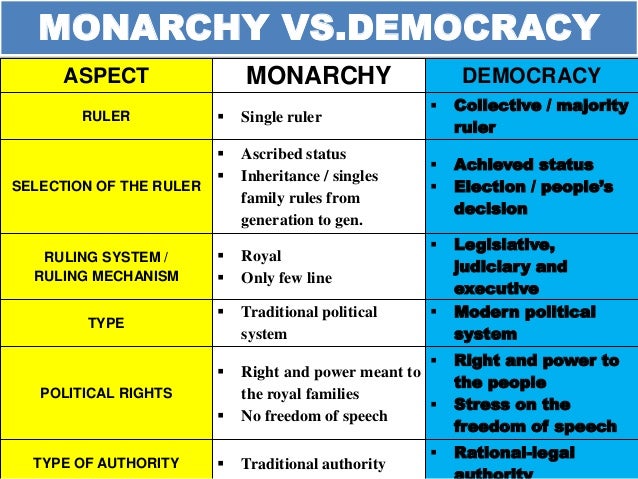
A monarchy is a form of government where the head of state—king, queen, emperor, or similar—holds the position by hereditary right. The lineage usually follows a predefined succession rule, such as primogeniture. In a republic, the head of state is typically an elected president or a similar figure, chosen by the people or their representatives for a limited term.
Historical Roots and Evolution
Monarchies trace back to feudal societies, where personal loyalty to a ruler replaced tribal allegiances. Over time, many monarchs consolidated power, creating centralized kingdoms that could marshal armies and levy taxes. The republican idea, on the other hand, emerged from ancient city‑states like Rome and later the Enlightenment, emphasizing that sovereignty belongs to the populace rather than a single bloodline.
How Leaders Are Chosen: Inheritance vs. Election
In a hereditary monarchy, the throne passes automatically according to family law—often the eldest child or the nearest male relative. This process bypasses public input, though constitutional monarchies may require parliamentary approval for certain royal actions. Republics rely on elections, referenda, or legislative appointments, ensuring that the head of state reflects, at least in theory, the current will of the electorate.
Distribution of Power: Absolute, Constitutional, or Parliamentary?
Monarchies vary widely. Absolute monarchies—think Saudi Arabia—grant the monarch near‑total control over legislation, judiciary, and military. Constitutional monarchies, such as the United Kingdom or Sweden, limit the monarch to ceremonial duties while elected bodies wield real power. In republics, the president’s authority can be strong (as in the United States) or largely symbolic (as in Germany), but the key is that any power rests on a constitution that can be amended or repealed.
The Role of Citizens: Participation and Accountability
Republican citizens regularly vote, petition, and run for office, creating a feedback loop between the government and the governed. Accountability mechanisms—like impeachment, judicial review, and free press—are built into the system. Monarchies often rely on tradition and national identity to foster loyalty, and while modern constitutional monarchies grant citizens voting rights, the royal family itself is typically insulated from direct public scrutiny.
Economic and Cultural Impacts
Monarchies can generate tourism revenue and serve as unifying symbols, especially in nations where the royal family embodies historical continuity. However, the cost of maintaining a royal household can provoke criticism, particularly when fiscal transparency is limited. Republics tend to focus resources on elected institutions and may allocate fewer funds to ceremonial pageantry, though they also bear the expense of regular elections and campaign financing.
Modern Examples: Where Each System Thrives
- Constitutional Monarchies: United Kingdom, Japan, Spain, Canada (as part of the Commonwealth).
- Absolute Monarchies: Saudi Arabia, Brunei.
- Presidential Republics: United States, Brazil, Indonesia.
- Parliamentary Republics: Germany, Italy, India.
These examples illustrate that the label “monarchy” or “republic” alone doesn’t predict a country's political culture; the constitutional framework and historical context shape each system’s reality.
Transitioning Between Systems: Challenges and Opportunities
Switching from monarchy to republic—or vice versa—often sparks intense debate. A shift usually requires a constitutional amendment, a referendum, or even a revolution. The French Revolution of 1789, which replaced the Bourbon monarchy with a republic, exemplifies how ideological upheaval can reshape governance. Conversely, Nepal’s 2008 transition from a centuries‑old monarchy to a federal democratic republic shows how modern pressures can dismantle hereditary rule.
Key Takeaways: Comparing Core Elements
While both monarchies and republics aim to provide stability and order, their core differences are stark:
- Source of Authority: Bloodline vs. popular mandate.
- Leadership Tenure: Lifetime (or until abdication) vs. fixed term.
- Power Checks: Tradition and constitutional limits vs. electoral accountability.
- Civic Involvement: Symbolic participation vs. direct voting power.
Grasping these contrasts helps you evaluate why certain nations thrive under one model while others prefer the alternative.
Frequently Asked Questions
What is the main difference between a monarchy and a republic?
The primary distinction lies in how the head of state obtains power: a monarch inherits the role, while a republic’s leader is elected by citizens or their representatives.
Can a constitutional monarchy function like a republic?
Yes, in many constitutional monarchies the monarch’s duties are purely ceremonial, and elected officials handle day‑to‑day governance, making the political experience similar to that of a republic.
Why do some countries keep monarchies despite modern democratic trends?
Monarchies often serve as cultural symbols that foster national unity and continuity, and they can also boost tourism and soft power without necessarily compromising democratic institutions.
Is it possible for a republic to become a monarchy?
Historically, transitions in the opposite direction have occurred, but a modern republic would need a major constitutional overhaul and public support to reinstate hereditary rule, which is rare in contemporary politics.