Oracle Cloud in Saudi Arabia: A Complete Regional Overview
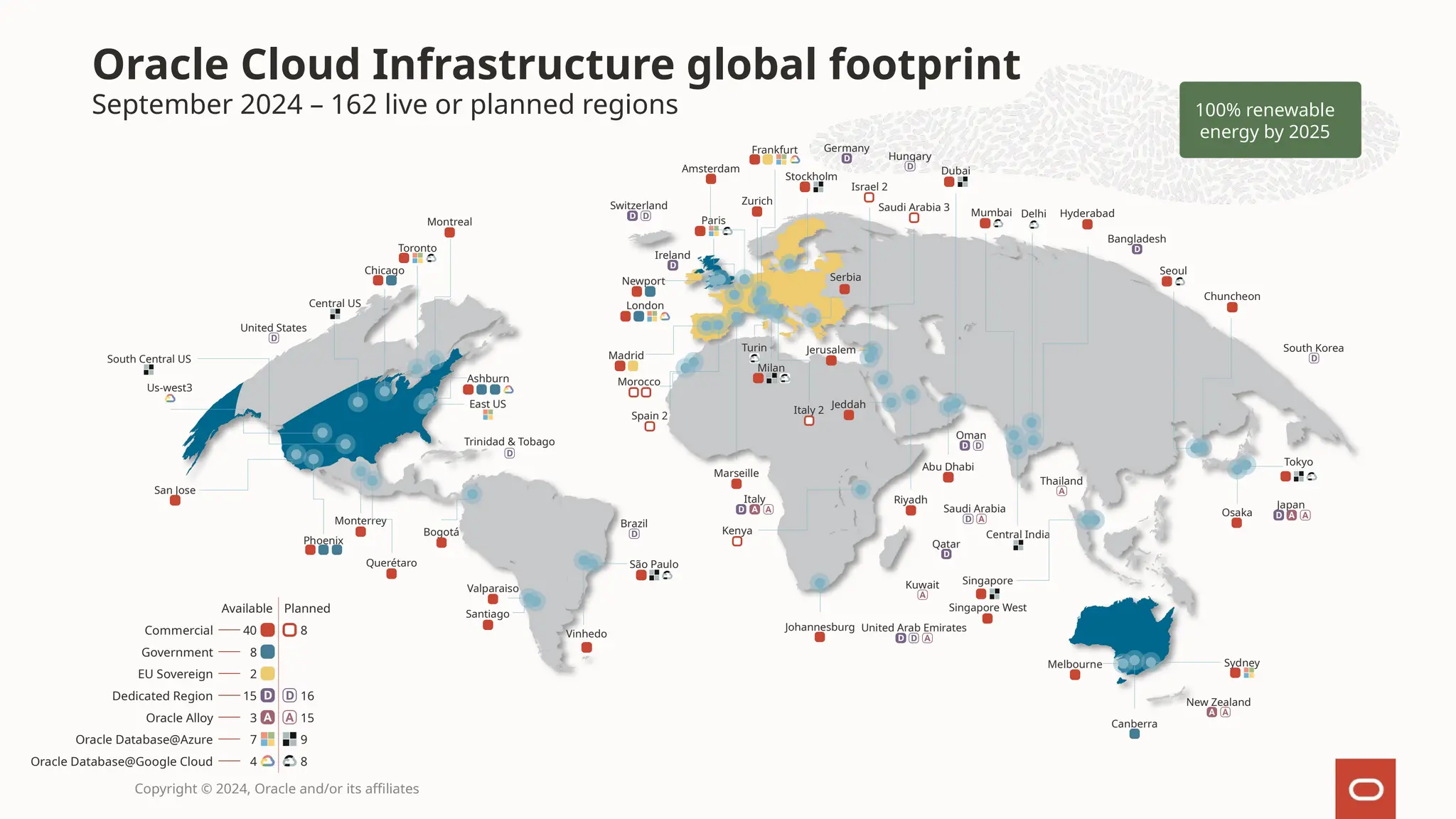
Oracle Cloud’s Saudi Arabia region has been making waves among enterprises looking for a blend of cutting‑edge technology and local compliance. Whether you’re a multinational with a foothold in the Kingdom or a home‑grown startup, the region offers a suite of services designed to run workloads faster, more securely, and closer to end‑users. In this overview we’ll unpack why the region matters, what services are on tap, and how you can get your first instance up and running.
Why Oracle Cloud Chose Saudi Arabia
Several forces converged to make the Kingdom an attractive spot for a sovereign cloud zone. First, the Saudi Vision 2030 agenda pushes for digital transformation across government and industry, creating demand for scalable, resilient infrastructure. Second, data‑localization rules require certain data to stay within national borders, and a locally‑hosted cloud satisfies that mandate without the latency penalties of cross‑border traffic. Finally, the region’s robust fiber backbone and emerging 5G rollout promise low‑latency connections for everything from AI inference to real‑time analytics.
Key Services Available in the Saudi Region
Oracle doesn’t just drop a handful of VMs and call it a day. The Saudi Arabia region mirrors the global portfolio, giving you access to:
- Oracle Autonomous Database – self‑tuning, self‑patching and self‑scaling, perfect for transactional and analytical workloads.
- Oracle Cloud Infrastructure (OCI) Compute – a range of shapes, from burstable CPUs for dev‑test to dedicated bare metal for high‑performance computing.
- Oracle Container Engine for Kubernetes (OKE) – managed Kubernetes clusters that simplify container orchestration.
- Oracle Cloud Native Services – Functions, API Gateway, and Streaming for event‑driven architectures.
- Oracle Analytics Cloud – built‑in AI to surface insights without moving data out of the region.
- Security and Identity Services – Vault, Identity Cloud Service, and Cloud Guard to meet Saudi data‑privacy standards.
All of these services are provisioned through the same OCI console you’d use for any other region, meaning there’s no steep learning curve if you’ve already been on Oracle Cloud elsewhere.
Performance and Compliance Benefits
Running workloads in the Saudi region cuts round‑trip time for users across the Gulf. Benchmarks from early adopters show latency improvements of 15‑30 % for web‑scale applications compared to routing traffic through the UAE or Europe. On the compliance side, the region is certified for ISO 27001, SOC 1/2/3, and adheres to Saudi Arabia’s National Cybersecurity Authority (NCA) controls. That dual focus on speed and regulatory alignment can translate into lower operational risk and better user experience.
Getting Started: How to Deploy Your First Instance
If you’re ready to spin up a VM or a database, follow these three steps:
- Create an OCI tenancy – If you don’t already have one, sign up on the Oracle Cloud website. Choose the “Saudi Arabia (Riyadh)” region during the tenancy setup.
- Select a service and shape – From the OCI console, pick Compute, Autonomous Database, or any other service. The “shape” determines CPU, memory, and networking resources; start small and scale later.
- Configure networking and security – Set up a Virtual Cloud Network (VCN) with public and private subnets, attach a security list, and enable Identity and Access Management (IAM) policies to restrict who can access the resources.
Once those basics are in place, you can connect via SSH for Linux VMs or SQL*Plus for Autonomous Database, and begin migrating workloads. Oracle’s migration tools, such as Oracle Zero‑Downtime Migration, help move existing on‑prem databases with minimal disruption.
Cost Considerations and Pricing Model
Oracle Cloud follows a pay‑as‑you‑go model, but the Saudi region includes a few nuances. Local data‑center operating costs are reflected in the per‑hour rates for compute and storage, which tend to be on par with other Middle‑East zones. Additionally, Oracle offers “Universal Credits” that let you apply a single pool of credits across multiple services, simplifying budgeting for hybrid workloads. Keep an eye on the “Always Free” tier, which now extends to certain services in the Saudi region—great for proof‑of‑concept projects.
Partner Ecosystem and Local Support
Oracle has cultivated a growing network of Saudi‑based system integrators and Managed Service Providers (MSPs). These partners can assist with architecture design, migration, and ongoing optimization. Moreover, the Oracle Cloud Support team operates a local help desk with Arabic‑speaking engineers, reducing the friction that sometimes accompanies global support channels.
Future Roadmap: What’s Next for the Region?
Oracle has hinted at expanding AI‑driven services and adding more edge‑computing nodes within the Kingdom. The plan aligns with Saudi Arabia’s push for smart cities and industry 4.0 initiatives. Expect tighter integration with Oracle’s Fusion Applications, especially in the public sector, as more ministries migrate their ERP and HCM suites to the cloud.
FAQ
Is data stored in the Saudi Arabia region truly isolated from other regions?
Yes. Each Oracle Cloud region is a separate, physically isolated data‑center cluster. Data residency rules are enforced at the region level, so information placed in the Saudi region never leaves that geographic boundary unless you explicitly configure cross‑region replication.
Can I use Oracle Cloud’s free tier in Saudi Arabia?
The “Always Free” tier is available, covering a limited set of services such as two compute instances, Autonomous Database, and object storage. It’s ideal for testing or small‑scale applications.
What compliance certifications does the Saudi region hold?
Beyond ISO 27001 and SOC, the region meets the Saudi National Cybersecurity Authority (NCA) guidelines and is compliant with GDPR for any European data you might process alongside local workloads.
How does latency compare to using a nearby UAE region?
Real‑world tests show roughly a 15‑30 % reduction in round‑trip latency for users in Saudi Arabia when the workloads run in the Riyadh data‑center versus the Dubai region, thanks to the proximity of the network backbone.