Understanding Respiratory Alkalosis: A Nurse’s Practical Handbook
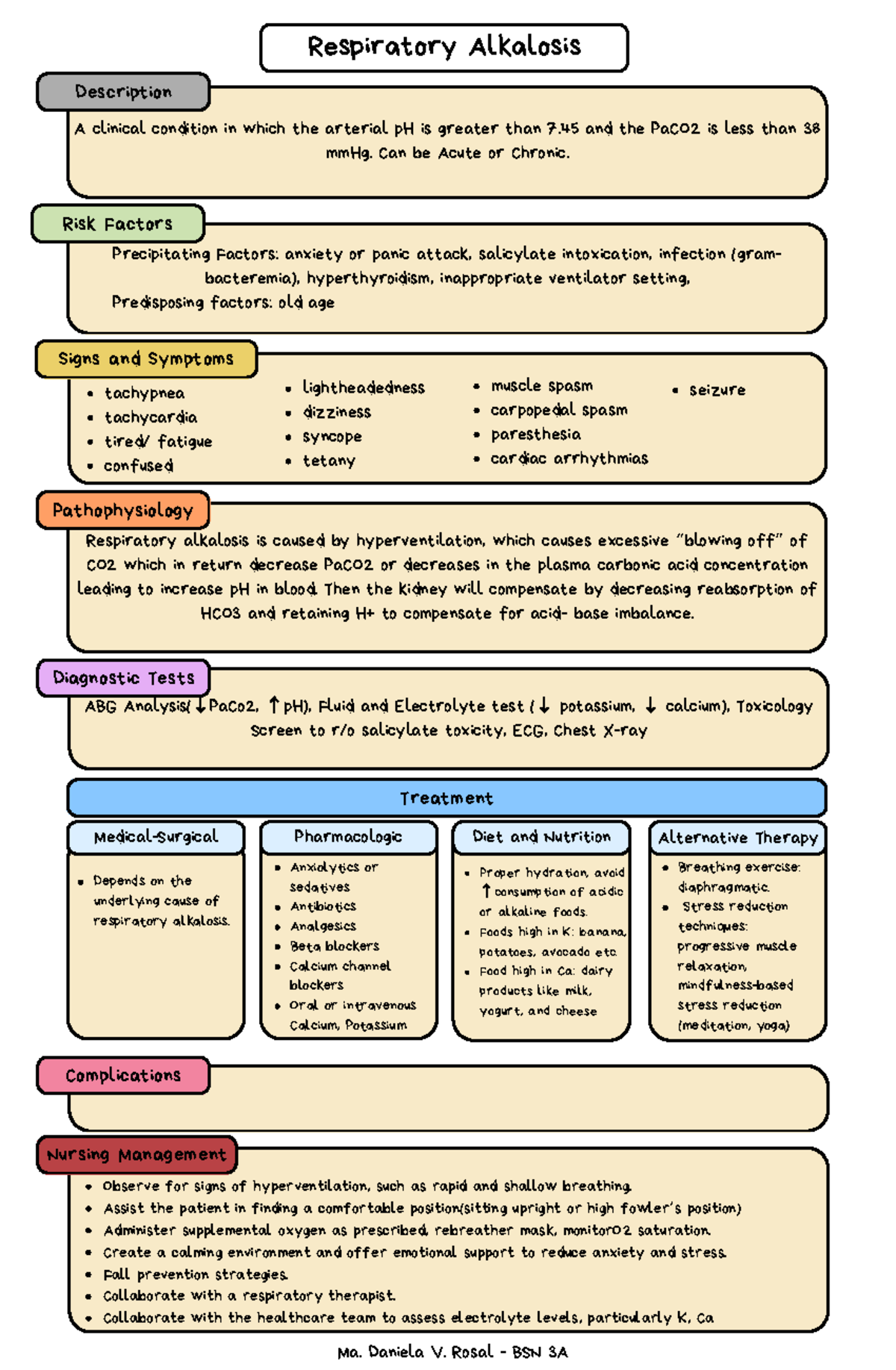
Respiratory alkalosis, a common but often underrecognized disturbance, can surface quickly in many clinical settings. It is the result of a decrease in arterial carbon dioxide tension (PaCO₂) that shifts the blood pH toward the alkaline end of the spectrum. For nurses, recognizing the early signs and intervening promptly can prevent complications and improve patient outcomes.
What Is Respiratory Alkalosis?
At its core, respiratory alkalosis is a ventilatory disorder where the lungs remove too much CO₂. CO₂ is a major component of the blood's buffering system; when it falls, the bicarbonate buffer is displaced, raising pH. The condition can be acute or chronic, each presenting with distinct physiologic adaptations.
Acute vs. Chronic
Acute respiratory alkalosis develops over minutes to hours, often in response to hyperventilation. The body has little time to compensate, so pH rises sharply. Chronic respiratory alkalosis, on the other hand, unfolds over days or weeks. In this scenario, the kidneys excrete bicarbonate, partially restoring balance. Nurses should note that chronic patients may appear normal on surface exam, yet still have significant acid‑base disturbances.
Key Causes
- Hyperventilation: Anxiety, pain, fever, or panic attacks can trigger rapid breathing.
- High-altitude exposure: Reduced atmospheric oxygen leads to compensatory hyperventilation.
- Severe pain or distress: Post‑operative or traumatic patients may inadvertently over‑breathe.
- Medication effects: Certain sedatives or stimulants alter respiratory drive.
Pathophysiology in Plain Terms
When CO₂ leaves the bloodstream, the partial pressure of CO₂ falls. The Henderson–Hasselbalch equation tells us that pH = 6.1 + log([HCO₃⁻]/(0.03 × PaCO₂)). A drop in PaCO₂ raises the log value, pushing pH higher. The kidneys attempt to counterbalance by excreting bicarbonate, but this response takes days. Until then, the patient remains at risk for arrhythmias and neurological symptoms.
Clinical Features to Spot
Patients with respiratory alkalosis often feel light‑headed, dizzy, or tingling in the fingers and toes. Neurologically, they may experience paresthesias, muscle cramps, or even seizures in severe cases. Cardiac manifestations include tachycardia or irregular rhythms, especially when the high pH alters ion channel function. In acute settings, a rapid rise in pH can provoke a cascade of symptoms that worsen if not addressed.
Diagnostic Workup: Quick Checklist
1. Arterial Blood Gas (ABG): The definitive test. Look for a pH >7.45 with PaCO₂ <35 mm Hg.
2. Bicarbonate level: In acute cases, it may still be within normal limits, whereas chronic cases often show a lowered bicarbonate.
3. Clinical history: Note recent changes in medication, pain level, or altitude.
4. Vital signs: Rapid heart rate and shallow breathing patterns are red flags.
Management Strategies for Nurses
Address the root cause: If hyperventilation stems from anxiety, employ calming techniques—deep‑breathing cues, guided imagery, or a quiet environment.
Ventilatory support: For patients on mechanical ventilation, adjust the respiratory rate and tidal volume to maintain PaCO₂ in the target range. For spontaneous breathing, consider using a rebreathing bag or placing the patient in a more comfortable position to reduce hyperventilation triggers.
Monitor cardiac rhythm: Electrocardiography can reveal arrhythmias that may need medical therapy.
Educate the patient: Explain the importance of controlled breathing and how it can help maintain acid‑base balance.
Prevention Tips for Nursing Practice
• Use pain management protocols to minimize post‑operative hyperventilation.
• Employ altitude acclimatization education for patients traveling to high elevations.
• Keep a low‑stress environment—soft lighting and minimal noise—to reduce anxiety‑driven breathing changes.
• Regularly review medication lists for drugs that influence respiratory drive.
Frequently Asked Questions
What are the main causes of respiratory alkalosis?
Common triggers include anxiety, pain, fever, high‑altitude exposure, and certain medications that stimulate the respiratory center.
How is respiratory alkalosis diagnosed?
An arterial blood gas (ABG) showing a pH >7.45 with a PaCO₂ <35 mm Hg confirms the diagnosis, often supplemented by clinical history and vital signs.
What immediate nursing interventions are essential?
Identify and mitigate the trigger, stabilize breathing patterns, monitor cardiac rhythm, and adjust ventilatory settings if the patient is on mechanical ventilation.