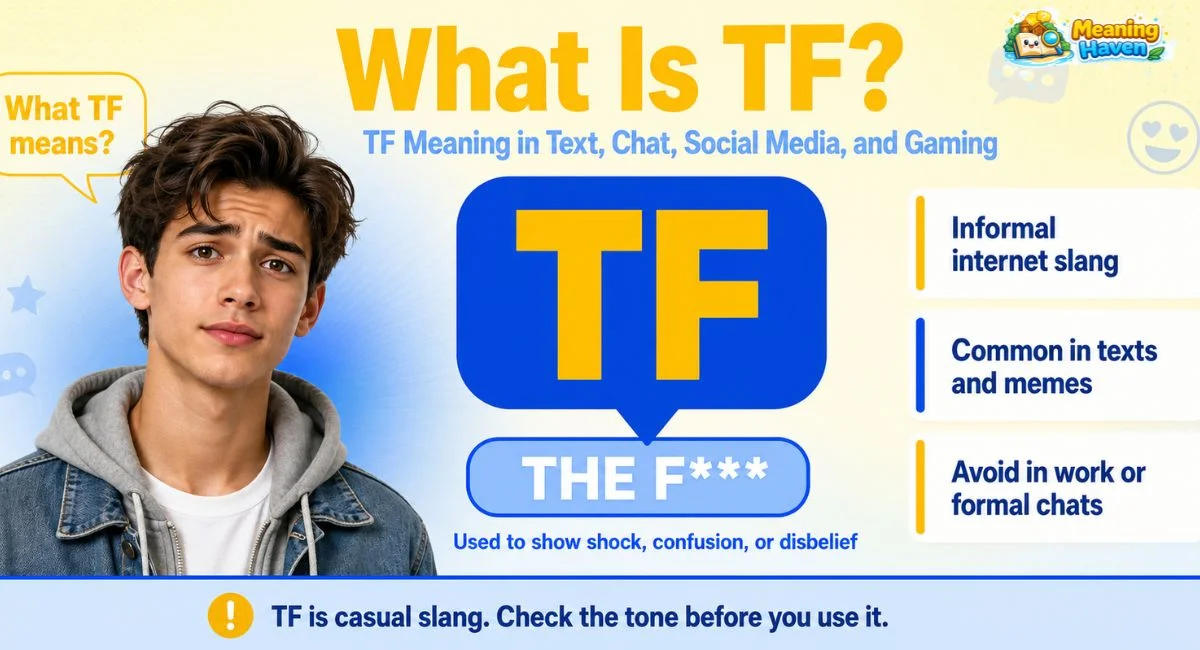
What Does “TF” Mean on Social Media? A Quick Decode
Scrolling through a tweet, Instagram comment, or Discord chat and you spot “TF?” It’s short, it’s cryptic, and it often leaves newcomers wondering if they’ve missed a secret code. In reality, “TF” is just another piece of internet shorthand that has slipped into everyday digital chatter. Below we unpack its origins, typical uses, and the nuances that keep it from being a one‑size‑fits‑all expression.
Where did “TF” first appear?
The exact birthplace of “TF” is hard to pin down, but language scholars trace its rise to early 2000s meme culture, especially on forums like 4chan and Reddit. Users needed a way to convey surprise, disbelief, or irritation without typing out a full phrase, and “TF”—a condensed version of “the f***”—fit the bill. Over time, the abbreviation migrated to mainstream platforms, where it now coexists with other shock‑value shortcuts such as “WTF,” “OMG,” and “LMFAO.”
How is “TF” used in everyday posts?
Most people drop “TF” into a sentence to ask “what the f***?”—in other words, “What on earth?” or “Seriously?” The tone can range from playful teasing to genuine frustration, depending on context and punctuation. Here are a few common patterns:
- Question form: “TF is going on with this update?” – a direct request for clarification.
- Exclamation: “You really bought that? TF!” – expressing disbelief.
- Combo with emojis: “TF 😳” – letting a tiny graphic carry part of the emotional weight.
Notice the flexibility: the same three letters can soften a rant or amplify a joke, all without the profanity that would trigger platform filters.
Variations you might run into
Because “TF” lives in a fluid slang ecosystem, you’ll sometimes see it altered or merged with other acronyms. A few examples include:
- WTF – the classic, fully spelled “what the f***,” used when the surprise is stronger.
- TFW – “that feeling when,” which is unrelated but often appears nearby in the same comment threads.
- TF? – a question mark that nudges the reader toward a direct answer rather than a statement.
These variations share a common thread: they all lean on brevity to keep the conversation moving quickly.
When is it okay to drop “TF”?
While “TF” is generally accepted in informal spaces, it’s not universally appropriate. Consider these guidelines before you type it out:
- Audience familiarity: Friends or community members who already use slang will likely take it in stride.
- Platform policies: Some platforms flag profanity‑related shortcuts, even when abbreviated. A quick check of community guidelines can spare you a hidden‑post warning.
- Professional settings: Even a truncated “TF” can feel unprofessional in a work Slack channel unless the culture explicitly embraces casual banter.
When in doubt, swap “TF” for a milder alternative like “what?” or “seriously?” to keep the tone safe.
Potential misunderstandings
Because “TF” drops the explicit “f***,” newcomers sometimes assume it’s a neutral abbreviation for something else—perhaps “the future” or “transfer function.” Context usually clears things up, but a misplaced “TF” in a technical discussion can cause a brief, puzzling pause. To avoid that, consider the surrounding words: if the sentence is about a surprise or confusion, the slang meaning is almost certain.
How to use “TF” without sounding forced
Authenticity shines through when slang feels natural. Here are a few tips for weaving “TF” into your digital voice:
- Use it sparingly. Overloading a conversation with “TF” can dilute its impact.
- Match the energy of the original poster. If they’re using “TF” lightly, mirroring that tone works; if they’re more formal, keep it out.
- Pair it with punctuation or emojis for clarity. “TF??” or “TF 😅” signals whether you’re joking or genuinely confused.
When you follow these cues, “TF” becomes a helpful shorthand rather than a crutch.
FAQ
What does “TF” stand for on Twitter?
On Twitter, “TF” typically abbreviates “the f***,” used to ask “what the f***?” in a concise way. It’s a shortcut that avoids the full profanity while preserving the shock value.
Is “TF” considered profanity?
It skirts the line. Because the word “f***” is implied rather than written, many platforms treat “TF” as less offensive, but some filters still flag it, especially in more conservative communities.
Can I use “TF” in a professional chat?
Generally it’s best to avoid “TF” in formal or client‑facing conversations. In a relaxed internal Slack channel where casual slang is the norm, it may be acceptable, but err on the side of caution if you’re unsure.
Are there regional differences in how “TF” is used?
The abbreviation is fairly universal across English‑speaking online spaces. However, certain regions may favor “WTF” more heavily, while others lean on “TF” to keep posts under character limits.