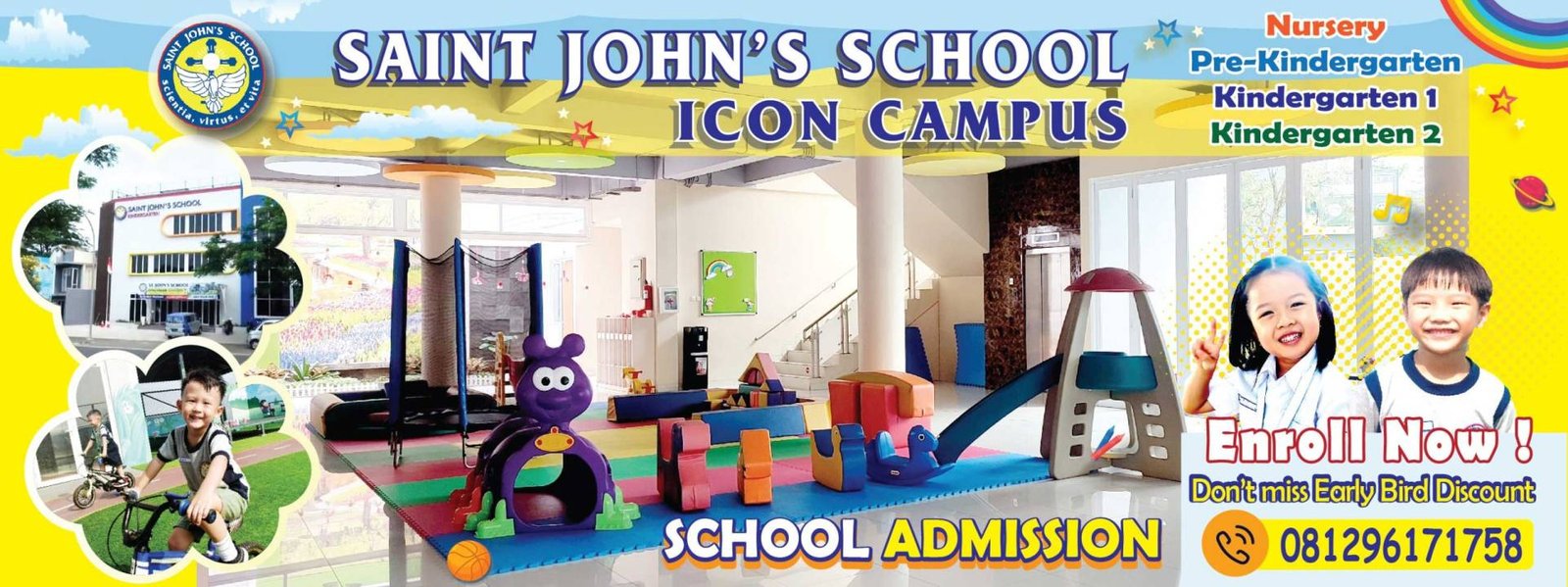
Your Complete Guide to Saint John's School Meruya, Indonesia
Location and Campus Overview
Saint John’s School Meruya sits on Jl. Meruya Utara in the western part of Jakarta, a bustling district that blends residential neighborhoods with small businesses. The campus spreads over roughly 5,000 m², featuring a main academic block, a sports hall, and a modest garden area where students gather for outdoor lessons. Its proximity to public transport—especially the Meruya bus stop—makes the commute straightforward for families living in the surrounding areas.
Brief History and Educational Philosophy
Founded in 1998 by a group of educators linked to the Catholic Archdiocese of Jakarta, Saint John’s School Meruya was built on the principle of “Faith, Knowledge, Service.” While rooted in Catholic values, the school welcomes students of all backgrounds, emphasizing moral development alongside academic rigor. Over two decades, the institution has grown from a modest 150‑student primary school to a full K‑12 facility serving more than 800 pupils.
Curriculum and Academic Programs
At the core, the school follows the Indonesian National Curriculum (Kurikulum 2013) but enriches it with several international elements:
- English Immersion: From Grade 4 onward, subjects such as science and social studies are taught partially in English, preparing students for global university pathways.
- STEM Initiatives: A dedicated robotics lab and weekly coding clubs give learners hands‑on experience with programming languages like Python and Arduino.
- Arts Integration: Visual arts, music, and drama are woven into the timetable, reflecting the belief that creativity bolsters analytical thinking.
Assessment balances national exams with project‑based evaluations, encouraging students to demonstrate understanding through presentations, portfolios, and community service reports.
Facilities That Support Learning
Beyond the standard classrooms, the campus boasts:
- A multi‑purpose auditorium equipped with a sound system for school productions and guest lectures.
- Two science laboratories (biology and physics) that meet national safety standards.
- A library of roughly 12,000 titles, featuring both Indonesian literature and English‑language reference works.
- Sports amenities including a basketball court, a small soccer field, and a swimming pool that doubles as a venue for life‑saving certification courses.
Extracurricular Landscape
Participation rates are high—over 70 % of students join at least one club. Popular options include:
- Debate Club: Competes in national youth debate tournaments and hosts workshops on public speaking.
- Eco‑Guardians: Organizes campus recycling drives and partners with local NGOs on beach clean‑ups.
- Music Ensemble: Offers lessons in piano, guitar, and traditional Indonesian instruments like the angklung.
These activities aim to nurture leadership, teamwork, and a sense of community responsibility.
Admissions Process and Fees
Prospective families start by submitting an online application form, followed by a school‑visit interview and a placement test in mathematics and Bahasa Indonesia. The school typically accepts students for the new academic year in July.
Tuition is tiered by grade level. For the 2024‑2025 school year, fees range from IDR 5 million per semester for early primary to IDR 9 million for senior secondary. Additional costs cover uniforms, laboratory materials, and optional extracurricular programs. Scholarships are awarded on a merit‑based basis and to families with demonstrated financial need.
Reputation and Alumni Success
Parents often cite the school’s balanced approach to academics and character building as a key strength. Alumni have pursued higher education at institutions such as Universitas Indonesia, the University of Melbourne, and Boston University. A handful of graduates have also entered the Indonesian civil service, citing the school’s emphasis on ethical leadership as instrumental to their career choices.
Frequently Asked Questions
What language is used for instruction at Saint John’s School Meruya?
The primary language is Bahasa Indonesia, but English immersion begins in Grade 4, especially for science and social studies.
Does the school provide transportation for students?
While there is no dedicated school bus, the campus is well‑served by public transport, and many families arrange carpools through a parent‑led network.
How does Saint John’s handle religious education?
Religious instruction follows the Catholic tradition, yet the curriculum includes comparative religion modules to foster respect for diverse faiths.
Can students enroll mid‑year if a spot becomes available?
Yes, the school maintains a waiting list and may admit new students during the academic year, provided they meet the placement test requirements.